
Last updated October 30, 2026
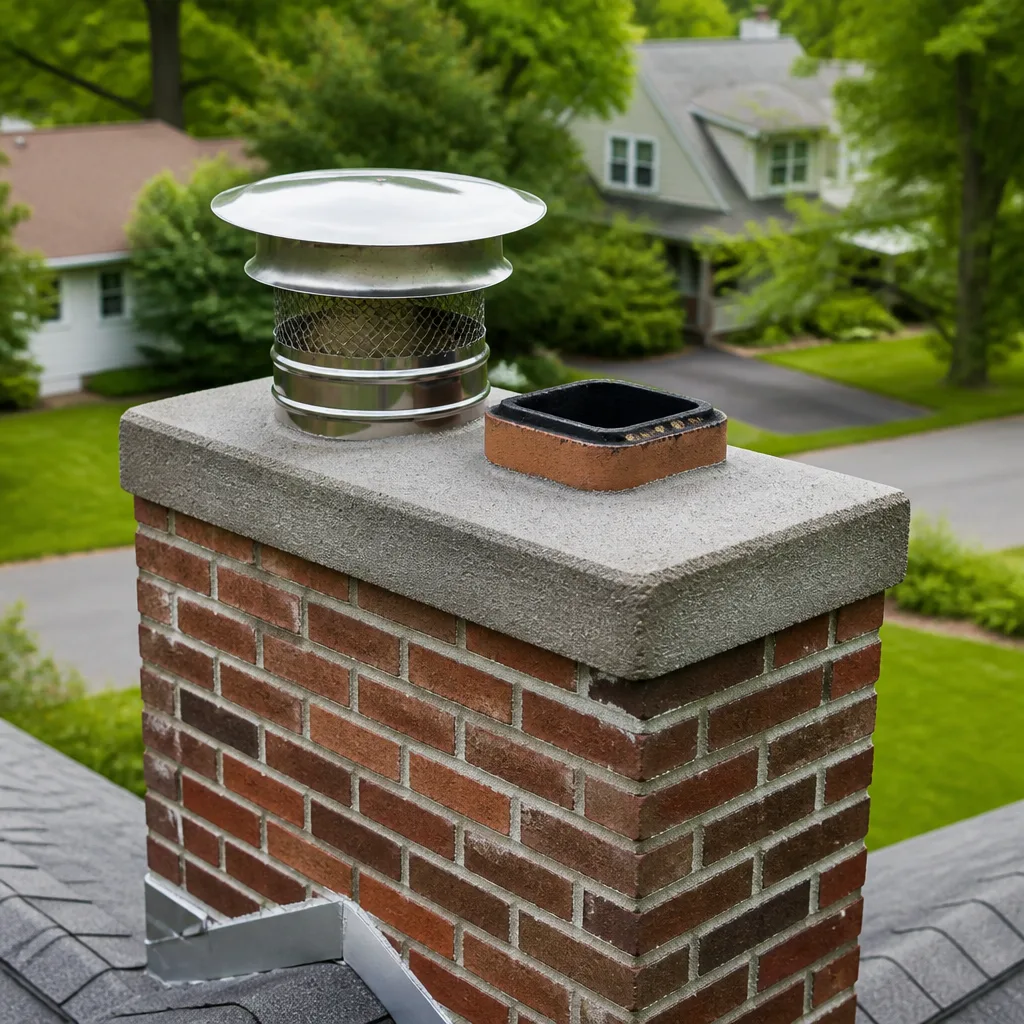 Sweep & inspection
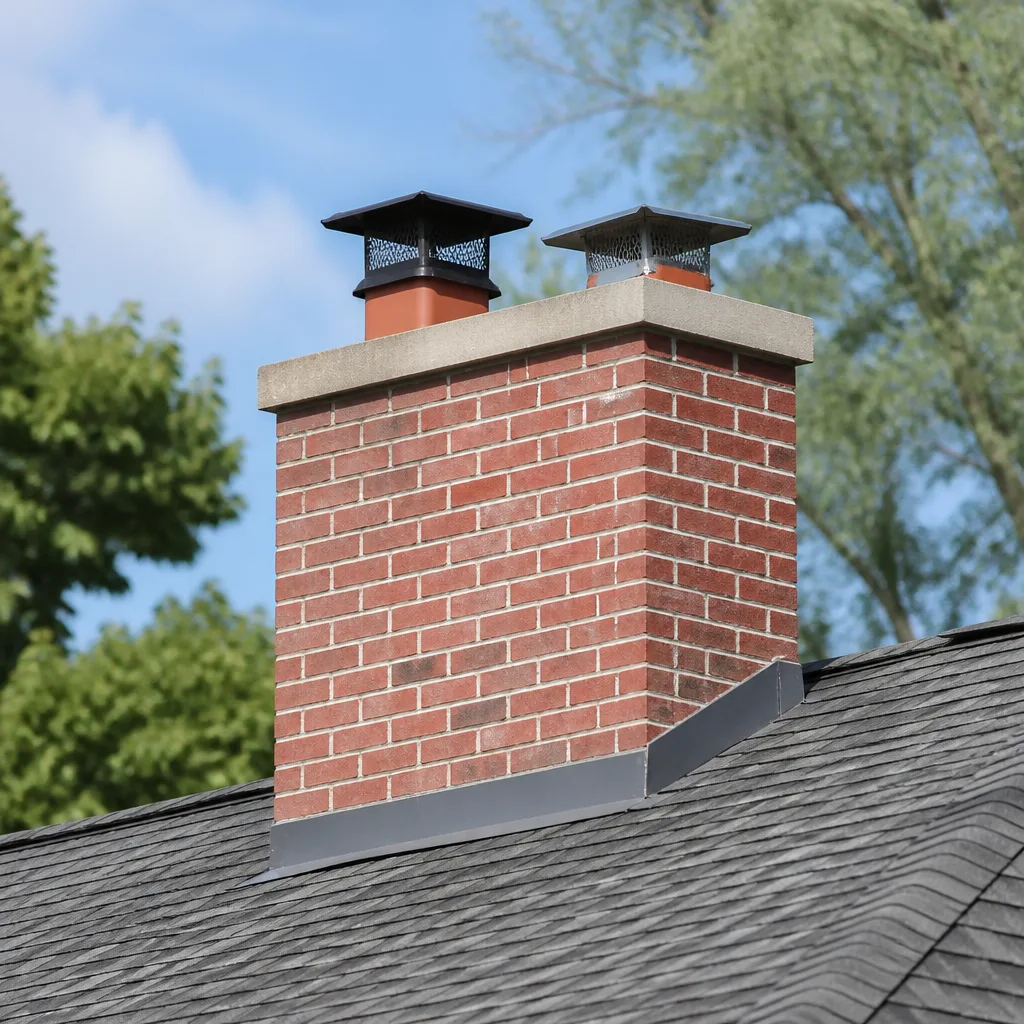 Caps & crowns
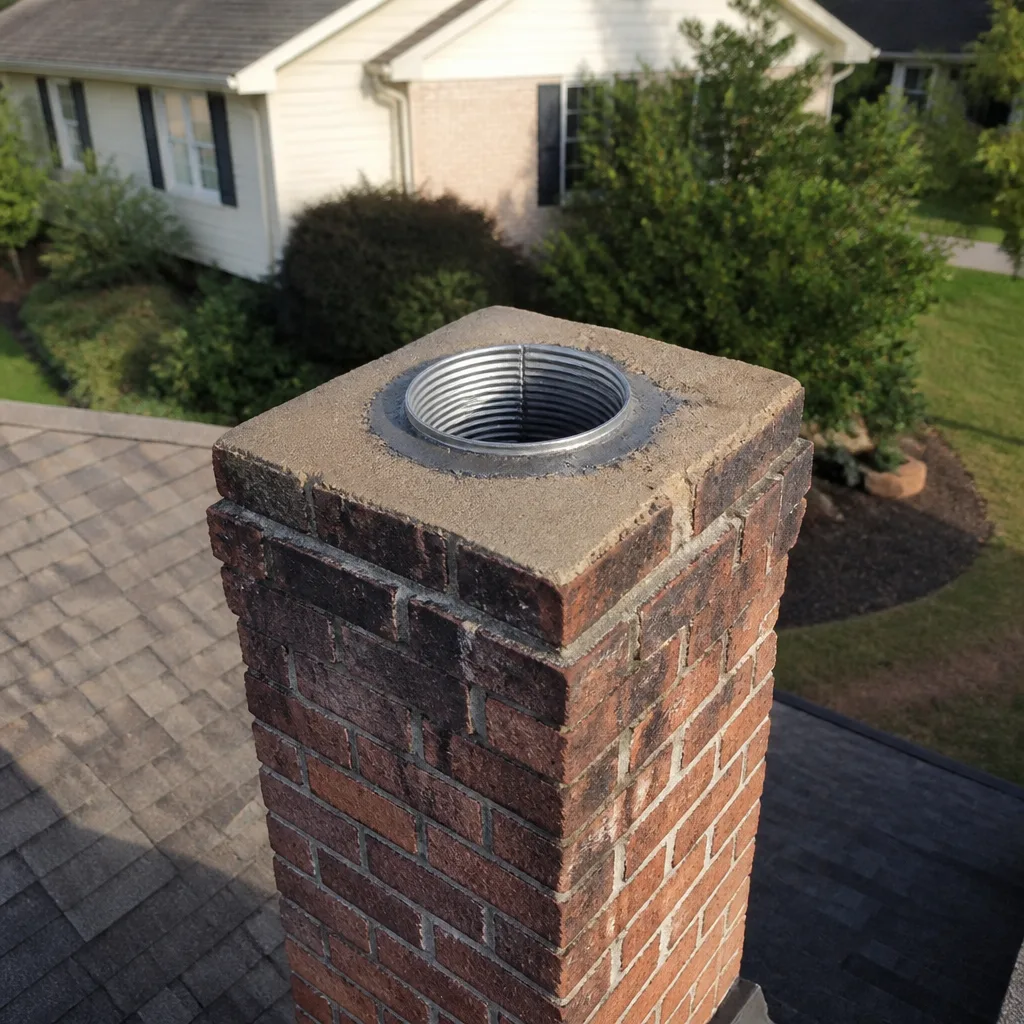 Flue relining
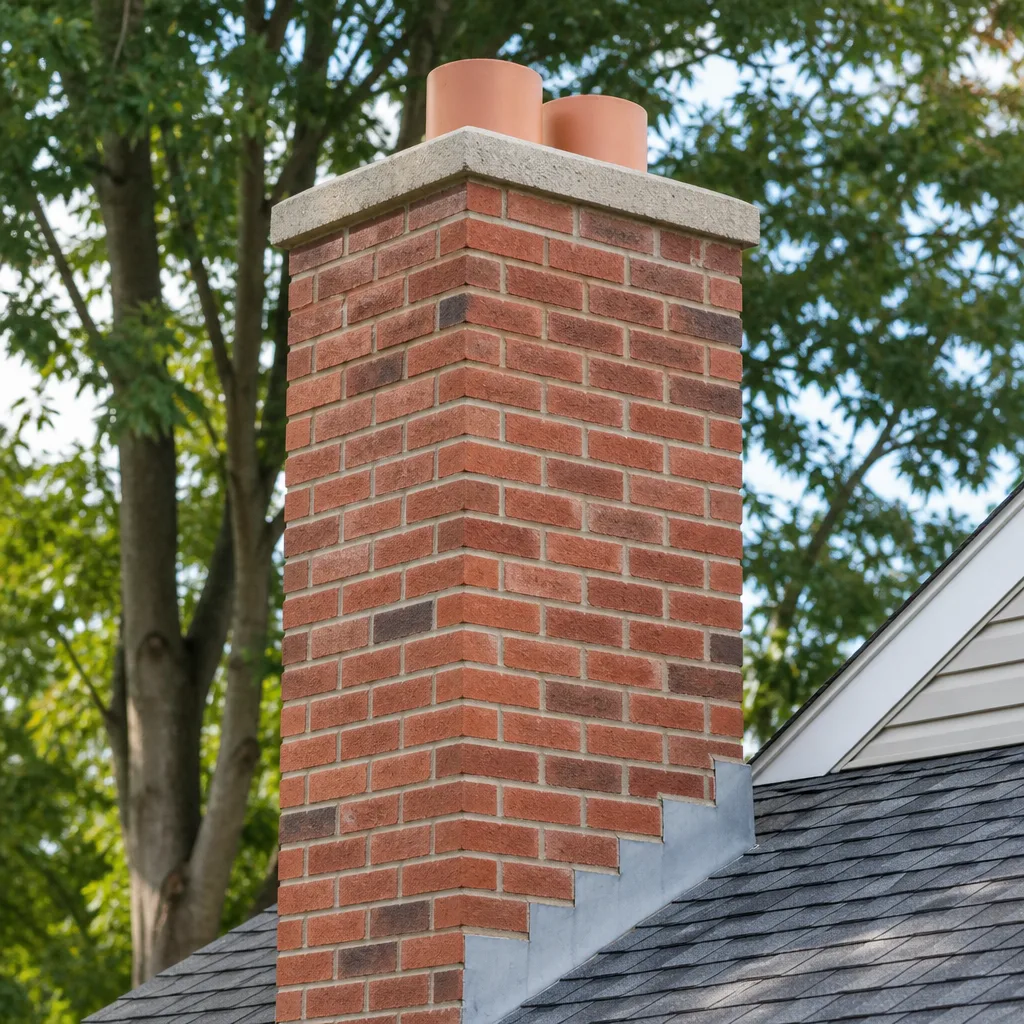 Masonry repair
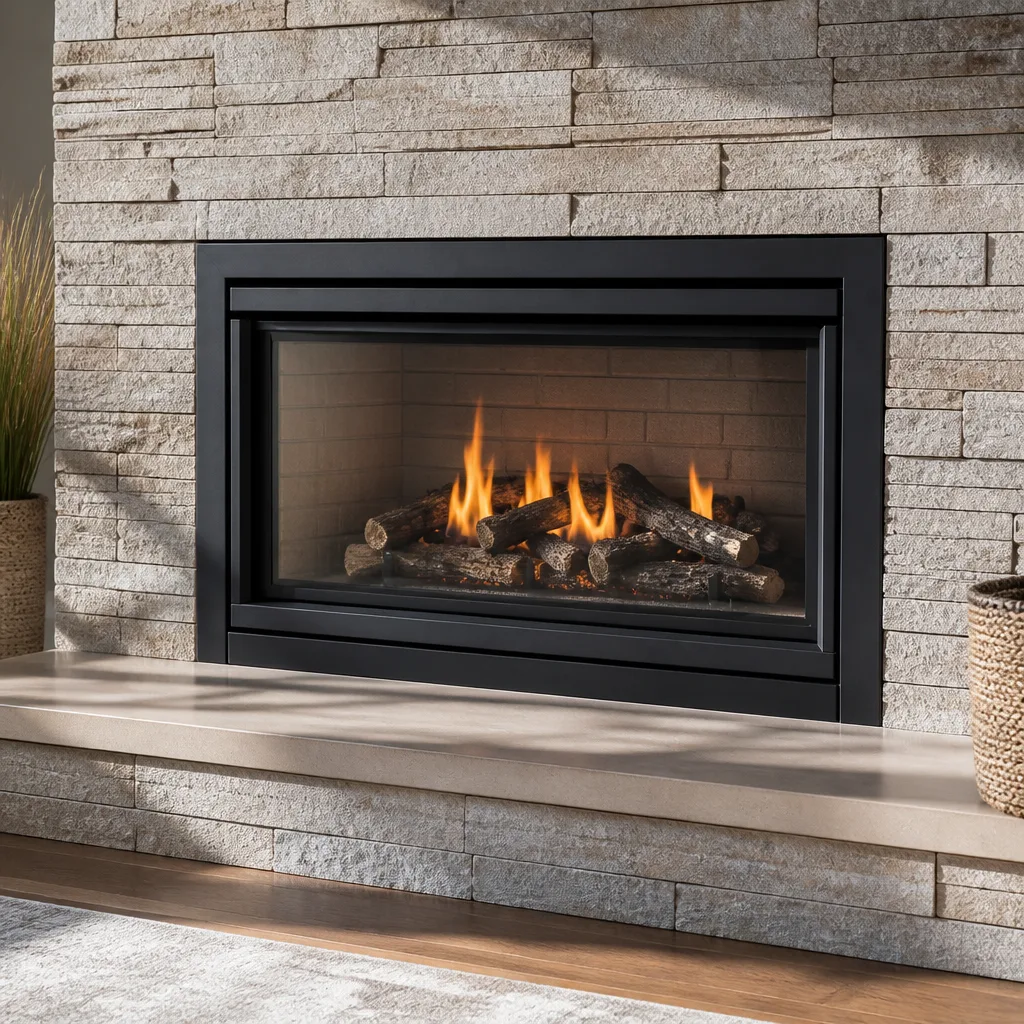 Gas fireplace service
Level 1 sweep and inspection to the NFPA 211 annual standard - flue, crown, cap, and flashing checked and photographed
Chimney sweep logs do not sweep chimneys. They loosen some creosote - which then falls where a brush and vacuum still have to collect it.
The Complete Guide to Chimney Cleaning in Rialto
Most Rialto homeowners use their fireplace fewer than 15 times a year, yet that low-use pattern actually accelerates one of the most dangerous forms of creosote buildup because fires never burn hot enough to clear the flue walls. This guide explains why chimney cleaning in Rialto works differently than in colder climates, what your inspection should actually include, and how to tell whether cleaning alone is enough or your liner needs deeper assessment. For related guidance, see our Seasonal Chimney Cleaning Care for Rialto: Year-Round Homeowner’s Guide. You’ll learn the specific debris patterns we see across Rialto’s older neighborhoods, what Santa Ana wind cycles do to unprotected flues, and how to approach this maintenance task without overpaying or underservicing your system.
Quick Answer
Chimney cleaning in Rialto typically costs between $189 and $350 for a standard sweep, and it’s recommended annually even if you rarely burn fires because Southern California’s dry climate and wildfire smoke corridors deposit particulate that creates fire risk regardless of usage. A proper cleaning includes a Level 1 inspection of the flue, smoke chamber, and exterior stack, and should be performed by a sweep who can assess liner condition rather than simply removing soot.
Styles & brands we work with
Table of Contents
- Why Chimney Cleaning in Rialto Is Different From Cold-Climate Homes
- What Actually Happens During a Chimney Cleaning
- Level 1 vs. Level 2 Inspections: What Rialto Homes Actually Need
- Why Your Liner Determines Whether Cleaning Is Enough
- The Debris Rialto Homes Collect: Palm Fronds, Eucalyptus Seeds, and Wind-Driven Sand
- How Often Should You Clean Your Chimney in Rialto?
- What Does Chimney Cleaning Cost in Rialto?
- Signs Your Chimney Needs Attention Now
Why Chimney Cleaning in Rialto Is Different From Cold-Climate Homes
The standard chimney maintenance advice you’ll find online was written for houses in Minnesota, New England, or the Pacific Northwest, places where fireplaces run nightly from October through March and creosote builds up in predictable, layered deposits that a rotary brush handles without much drama. Rialto does not fit that model. Our climate produces a different kind of flue contamination, and it catches homeowners off guard precisely because they assume light usage means light maintenance.
Here’s what actually happens. When you burn a fire occasionally, say 10 to 15 times between November and February, the flue never reaches the sustained high temperatures that cold-climate chimneys hit during marathon burn seasons. Those sustained temperatures are what burn off the early stages of creosote before they harden. Without that heat cycle, the creosote that does form during your occasional fires cools quickly, condenses, and bonds to the flue walls in a dense, tarry layer. The next fire reheats it partially, and the next low-temperature burn adds another coat. Over two or three years of light use, you develop what sweep technicians call glazed creosote, a hard, shiny, highly flammable residue that brushes scrape across rather than remove. This is the single most common condition we address in Rialto chimneys, and it’s almost always surprising to the homeowner because the firebox looks perfectly clean.
There’s also the matter of what enters your flue when no fire is lit at all. Rialto sits in the path of wind patterns that carry ash and particulate from wildfire corridors in the San Bernardino foothills and the broader Inland Empire airshed. Unprotected flues, meaning chimneys without a properly fitted cap or damper seal, pull that particulate down through convection even when the fireplace is dormant. We’ve opened dampers in Rialto homes that haven’t seen a fire in two years and found a quarter inch of fine gray dust coating the smoke shelf. That dust is combustible, and it’s sitting directly above your firebox.
The takeaway: low-use fireplaces in Rialto need cleaning on a schedule, not on a usage count. And the inspection matters more than the brushing because what’s in your flue is likely not the fluffy soot a quick sweep removes.
What Actually Happens During a Chimney Cleaning
A proper chimney cleaning is not a guy with a brush on a drill. It’s a systematic process that inspects while it cleans, and if your sweep skips any of these steps, you’re paying for a partial job. Here’s the sequence a thorough cleaning follows:
- Interior preparation. The technician lays drop cloths around the hearth, covers nearby furniture with plastic sheeting, and runs a HEPA-filtered vacuum to capture dust rather than blowing it into your living room. If your sweep doesn’t do this first, reschedule.
- Visual examination. Before any brushing happens, the tech looks up the flue with a flashlight and inspects the firebox, damper assembly, and smoke chamber. This is where obvious problems surface: cracked firebrick, a rusted damper, or animal nesting material.
- Mechanical sweeping. A properly sized wire brush, often polypropylene for clay liners or a gentler brush for stainless systems, runs the full length of the flue from either the top down or the firebox up. The goal is to break the bond between creosote and the liner wall.
- Rotary treatment for heavy buildup. If the creosote is glazed or the flue shows heavy accumulation, a rotary cleaning head with steel cables and carbide-tipped chains spun at speed against the liner walls removes what a static brush cannot. This is the difference between a $99 advertised special and a real cleaning.
- Smoke chamber and smoke shelf cleaning. Most fires don’t just line the flue. They deposit significant creosote in the smoke chamber, the angled area above the damper you can’t see from below. A professional sweep cleans this through the damper opening with specialized tools, and any sweep who skips it is leaving the highest-risk creosote in place, because this area gets very hot and very close to combustible framing.
- Debris removal and final vacuum. Everything that came off the flue walls falls into the firebox or the cleanout door at the base of the chimney. The tech removes it completely and does a final HEPA vacuum pass.
- Post-clean inspection report. You should receive a written or verbal summary of what was removed, what condition the liner is in, and whether the sweep recommends anything beyond the cleaning. If your sweep can’t tell you the liner material, the condition of the smoke chamber, or whether the cap is intact, they weren’t inspecting. They were just brushing.
For Rialto homeowners specifically, step 4 matters more than it does in most of the country. The low-temperature, low-frequency burn pattern we described earlier produces glazed creosote more often than not, and if your sweep arrives with nothing but a basic brush kit, that glazing is staying put. This is why Chimney Sweep in Rialto service calls include a full rotary treatment when the inspection warrants it, and why we explain the difference rather than just charging for it.
Level 1 vs. Level 2 Inspections: What Rialto Homes Actually Need
The National Fire Protection Association defines three inspection levels, and understanding the difference between the first two will keep you from paying for more than you need or settling for less than you should demand.
Level 1 inspection is what accompanies every standard chimney cleaning. The technician examines the readily accessible portions of the chimney: the firebox, damper, smoke chamber if visible from below, the flue interior, and the exterior stack from ground level. No special access equipment is used. The purpose is to verify that the system is fundamentally sound and free of obstructions. For a Rialto home with an actively used fireplace that has been cleaned on schedule and has no structural changes, a Level 1 inspection plus cleaning is the standard annual service.
Level 2 inspection is required in specific circumstances: when you’re selling the home, when there’s been a chimney fire, when a storm or earthquake may have damaged the structure, or when you’re changing fuel type, such as converting a wood fireplace to gas. A Level 2 inspection includes everything in Level 1 plus access to the attic, crawl space, and roof areas around the chimney. The technician uses a video camera system to scan the full interior of the flue, documenting liner condition in detail. This is the inspection that catches hairline cracks in clay liners, failing mortar joints, and separation in factory-built systems.
Here’s the practical translation for Rialto. Given the earthquake activity in Southern California and the age of many homes in central Rialto, which date from the 1950s through the 1980s, a Level 2 inspection is worth the additional cost whenever you buy a home with an existing fireplace, whenever you haven’t used the fireplace in more than two years, or whenever you notice water staining or efflorescence on the chimney exterior. Those are all signs of potential structural compromise, and a Level 1 look will not catch them.
What should the camera show you? A proper Level 2 inspection means you see the footage. The technician should be able to point out the condition of each flue tile or the continuous surface of a stainless liner, identify any gaps or cracks, and give you a clear read on whether the system is safe to operate. If the camera work is done but you’re not shown the images, ask for them.
Why Your Liner Determines Whether Cleaning Is Enough
Here’s where most generic guides fall short. They treat chimney cleaning as if the flue is one uniform surface, and once it’s brushed, the job is done. But the liner, the inner wall that contains the heat and combustion gases, is the actual safety system, and its condition changes everything about what cleaning accomplishes.
If your Rialto home has a clay tile liner, which is standard for masonry chimneys built before the 1990s, those tiles crack over time. Freeze-thaw cycles aren’t really our issue, but ground movement is, and the repeated heating cycles of intermittent fires create thermal stress that clay absorbs poorly. Once a clay liner cracks, even a thorough cleaning cannot restore the system to safe operating condition. The gaps allow heat and gases to reach the masonry surrounding the flue, and in a worst case, that’s where chimney fires migrate to house fires.
If your liner has failed, you have two available paths. The first is a full stainless reline, where a new DuraFlex liner is pulled through the existing masonry structure, creating a continuous, insulated, code-compliant flue. The second, and often better option for partial deterioration, is a HeatShield restoration, which essentially resurfaces the existing liner with a ceramic-based sealant applied with specialized tools, rebuilding the liner in place without the cost and disruption of full replacement. HeatShield restoration can add years to a deteriorating liner without a full replacement, and it’s a repair path most sweep-only competitors don’t carry because it requires specific manufacturer training and certification.
This is where the quality of your cleaning appointment matters beyond the brush. A technician who is literate in liner materials will check your flue with more than a flashlight, will look for the specific signs of clay spalling or stainless corrosion, and will tell you honestly whether your cleaning is complete maintenance or whether the system needs repair before it’s safe to burn again. If your sweep can’t name the liner material in your chimney, they can’t assess it, and you’re not getting a meaningful inspection.
For a deeper look at what repair assessment involves, see our Chimney Repair in Rialto page, which covers liner failure modes and restoration options in detail.
The Debris Rialto Homes Collect: Palm Fronds, Eucalyptus Seeds, and Wind-Driven Sand
Every region has its own chimney debris profile, and Rialto’s is distinct enough that it’s worth naming the specific materials we remove from flues across the city. Knowing what to expect helps you understand what you’re looking at when the sweep shows you the debris pile.
Palm frond fragments. Rialto’s older neighborhoods, particularly the areas built around the Santa Fe rail corridor and the residential streets east of Riverside Avenue, are thick with mature palm trees. Those fronds shed constantly, and the fiberous pieces blow the way the Santa Anas blow them, which means into open chase covers and uncapped flues. Palm fiber is deceptively problematic: it’s slow to burn, packs into the flue like insulation, and creates dense, stubborn blockages that can reduce draft to nearly nothing.
Eucalyptus seeds and bark. The blue gum eucalyptus planted en masse in the mid-20th century throughout the Inland Empire is a messy tree, shedding seed pods, strips of bark, and oil-heavy leaves on a year-round schedule. Eucalyptus debris in a flue is particularly flammable, because the oils in the leaves and bark ignite eagerly and burn hot. A few seasons of accumulated eucalyptus material in the smoke shelf is a legitimate fire hazard, and it’s one of the first things a good sweep checks during the inspection.
Wind-driven sand and dust. The Santa Ana wind cycles that blow from the desert through the Cajon Pass carry fine sand and particulate that settles on every horizontal surface in Rialto, including inside your chimney. Uncapped flues collect this material, and after a few wind seasons, it forms a dense, gritty layer that bonds with any creosote present. The combination of wind-blown sand and cooled creosote creates an abrasive, hard deposit that resists simple brushing and often requires the rotary treatment we described earlier.
The common thread here is that all three of these debris types enter the chimney regardless of whether you burn fires. That’s the point that separates Rialto from cold-climate cleaning advice: your flue gets dirty from the environment alone, and skipping inspection because you “never use” the fireplace is exactly how these blockages and fire hazards develop unnoticed.
How Often Should You Clean Your Chimney in Rialto?
The short answer is annually, but the reasoning specific to Rialto is more useful than the standard advice. The NFPA recommends cleaning whenever creosote accumulation reaches 1/8 inch, and the question is how quickly your system hits that threshold.
Here’s a schedule that fits how Rialto homes actually operate:
- Active wood-burning fireplace (20+ fires per year): Clean every year, ideally in late summer or early fall before burning season. This catches the peak of accumulation and gives you a clean start for winter.
- Occasional use (5 to 15 fires per year): Still clean every year. As we covered earlier, low-frequency use produces glazed creosote, which is harder to remove and more dangerous than the soft soot of heavy use. Do not assume light use means light maintenance.
- Gas fireplace or gas logs: Clean every two years at minimum. Gas systems produce far less creosote, but they do produce soot and can develop blockages from environmental debris. The inspection also checks the gas log set, burner, and venting.
- Unused fireplace (zero fires in a given year): Clean or at minimum inspect every two years. Environmental debris accumulation is the issue here, particularly if the flue is uncapped or the damper doesn’t seal tightly.
- Recently purchased home with an existing fireplace: Clean and inspect before your first fire, period. You don’t know how the previous owner maintained the system, and you don’t know what’s accumulated in a flue that may have sat idle for years. This is a Level 2 situation in most cases.
Yearly maintenance also catches small problems before they become structural. A small crack in a flue tile, a loose cap, a beginning of water penetration, each of these is a repair in the low hundreds of dollars when caught early and a multi-thousand-dollar project when ignored.
What Does Chimney Cleaning Cost in Rialto?
Chimney cleaning costs in Rialto vary by the condition of the flue, the type of system, and the level of inspection performed. Here’s what to budget, based on the range we see across Inland Empire pricing:
| Service | Typical Cost in Rialto | Includes |
|---|---|---|
| Standard sweep (Level 1 inspection) | $189 – $275 | Brushing, smoke chamber cleaning, debris removal, visual inspection |
| Sweep with rotary treatment (glazed creosote) | $275 – $350 | Everything above plus powered rotary cleaning for hardened deposits |
| Level 2 inspection (camera scan) | $250 – $400 | Full video documentation, attic/crawl access, written condition report |
| Sweep plus Level 2 inspection | $350 – $500 | Combined service, often the right choice for a new purchase or long-idle system |
| Chimney cap installation (if missing) | $150 – $350 | Material and labor, specific to cap type and flue size |
Watch for the $99 advertised specials. They exist to get a technician to your home and generate upsell opportunities. The price covers a basic brush-through of the flue, and the inspection that accompanies it is often superficial. That’s not to say every low-price offer is a scam, but Rialto’s debris profile and glazed creosote tendency mean most homes require the full service anyway, and the low advertised price will not cover the work your chimney actually needs.
We give flat-price quotes before any work begins, and our estimates are free. The number is (855) 360-4975. Call with your fireplace type and approximate age of the home, and we’ll give you a realistic number before anyone arrives.
Signs Your Chimney Needs Attention Now
Some chimney problems announce themselves. Others stay quiet until they become dangerous. Here are the indicators that mean you should schedule a cleaning and inspection sooner rather than later, regardless of your maintenance calendar:
- Smoke entering the room when you light a fire. This means the flue is not drafting properly. Blockage, creosote accumulation, or a damper problem are the usual causes, and all are fixable if addressed early.
- A strong odor from the fireplace, especially on humid or hot days. Creosote emits a distinct smell, like asphalt or burnt barbecue, when it warms. If you smell it in summer without a fire, the accumulation is significant.
- Visible black, shiny coating on the flue walls. If you look up the flue from the firebox with a flashlight and see a reflective, tar-like surface, that’s glazed creosote, and it’s a fire hazard that requires specialized cleaning.
- Animal sounds or droppings. Birds, squirrels, and raccoons find Rialto chimneys appealing, especially uncapped ones. Nesting material is combustible and blocks draft.
- Water staining on the ceiling or walls near the chimney. This indicates a cap or flashing problem, and water intrusion compounds every other chimney issue, accelerating liner deterioration and masonry damage.
- Crumbling or flaking material in the firebox. If the firebrick inside the firebox is spalling, meaning pieces are crumbling off, the chimney has heat or water damage that warrants inspection.
If any of these apply, don’t wait for the next annual window. Early intervention catches problems when they’re cheap to fix. Ignoring them means the problem grows while you’re not looking.
Common Mistakes to Avoid
- Skipping cleaning because you never use the fireplace. Environmental debris accumulates regardless of use, and in Rialto’s wind environment, that accumulation is substantial. An unused fireplace with an uncapped flue is not a clean fireplace; it’s a collection pit.
- Hiring based on the lowest advertised price. The $99 special gets a brush in your flue and a technician in your home. It does not include the smoke chamber cleaning, proper inspection, or rotary treatment that Rialto chimneys typically require.
- Burning unseasoned wood or trash. Wet wood and household waste burn at low temperatures and produce disproportionate creosote. In a low-use fireplace, that’s the exact fuel profile that creates glazed Creosote fastest.
- Ignoring a missing chimney cap. Every season uncapped adds environmental debris, moisture, and potential animal entry. A cap is the cheapest insurance your chimney has, and it’s a one-time cost.
- Accepting a cleaning without an inspection. Brushing removes soot but tells you nothing about liner condition. The inspection is the safety component; the brushing is just hygiene.
- Converting fuels without a Level 2 inspection. Wood to gas conversions change the heat profile and venting requirements of your system. Skipping the inspection means operating a gas appliance in a flue that was never designed for it.
- Assuming one sweep is the same as the next. The difference between a technician who can identify a failing clay liner and recommend HeatShield restoration or a DuraFlex reline, and one who simply brushes what they can reach, is the difference between a maintained system and a deferred failure.
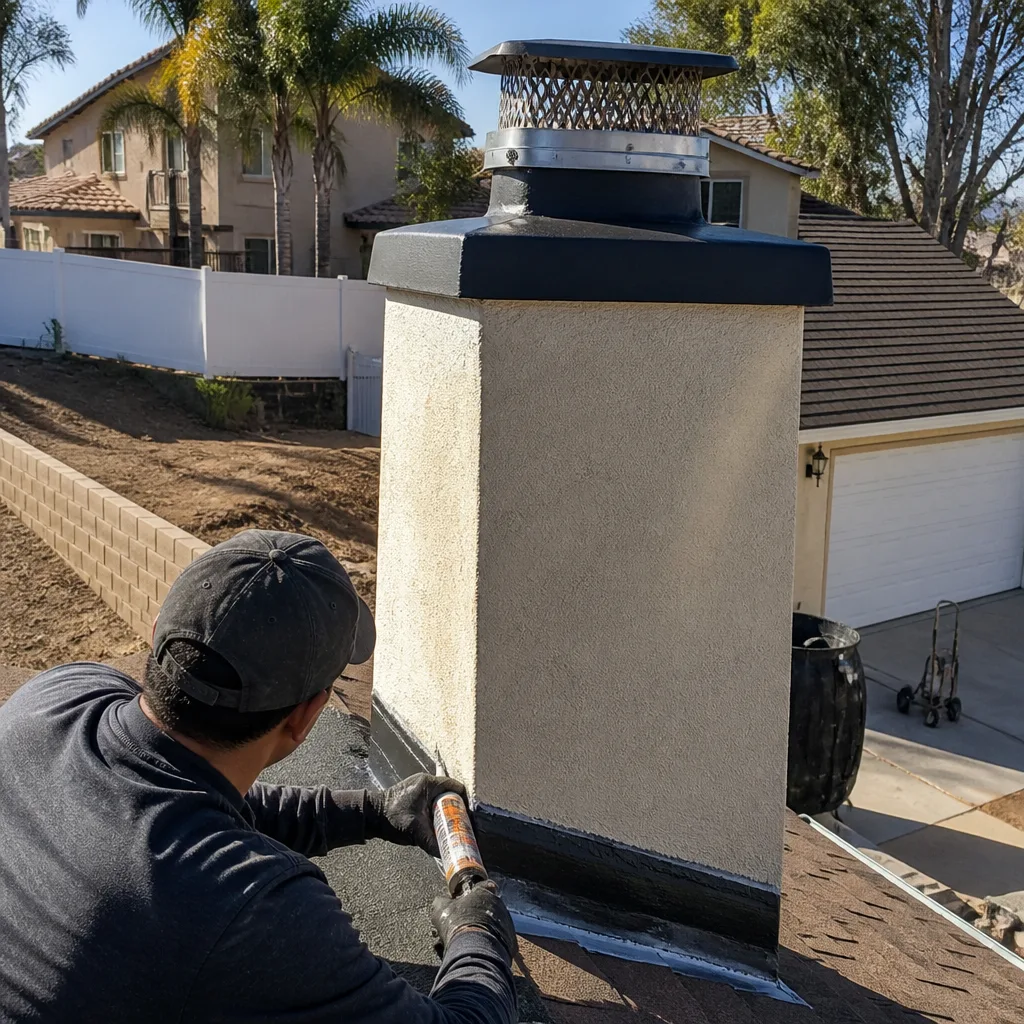
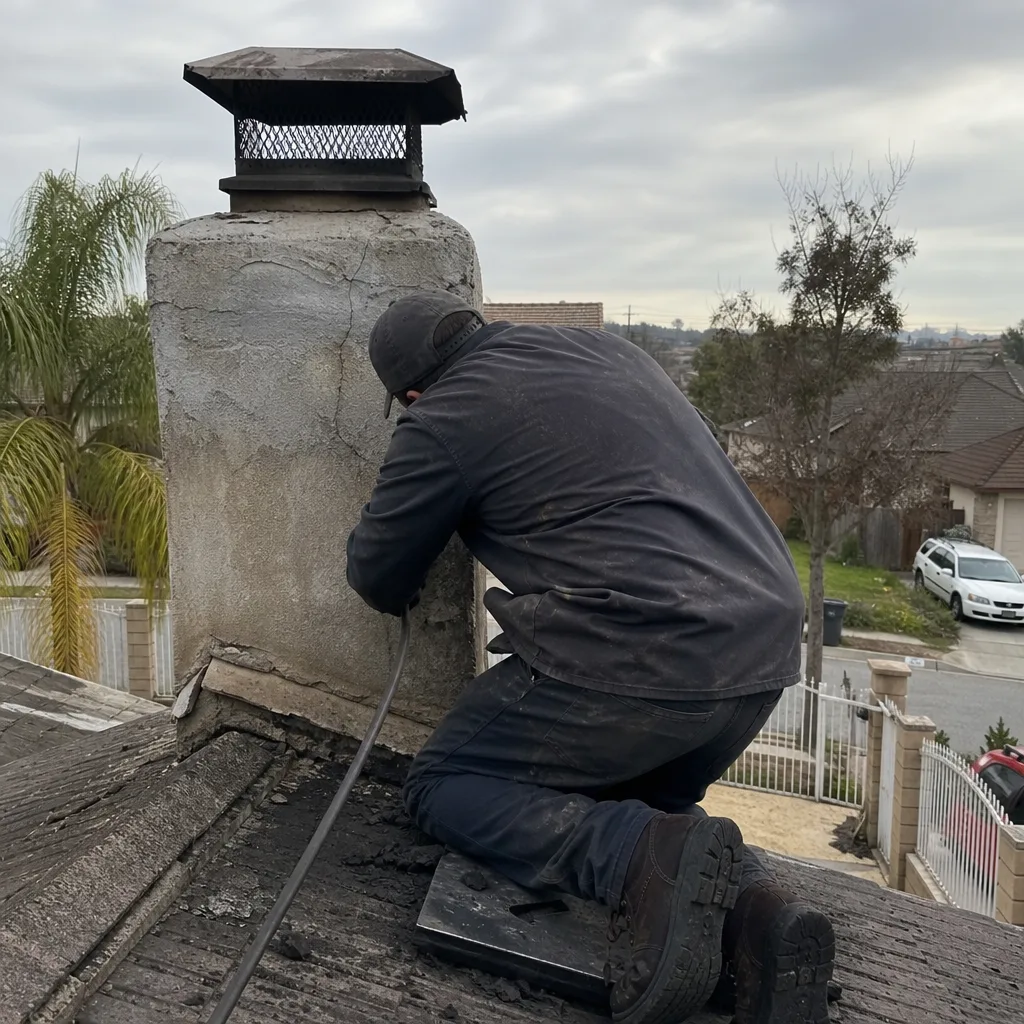
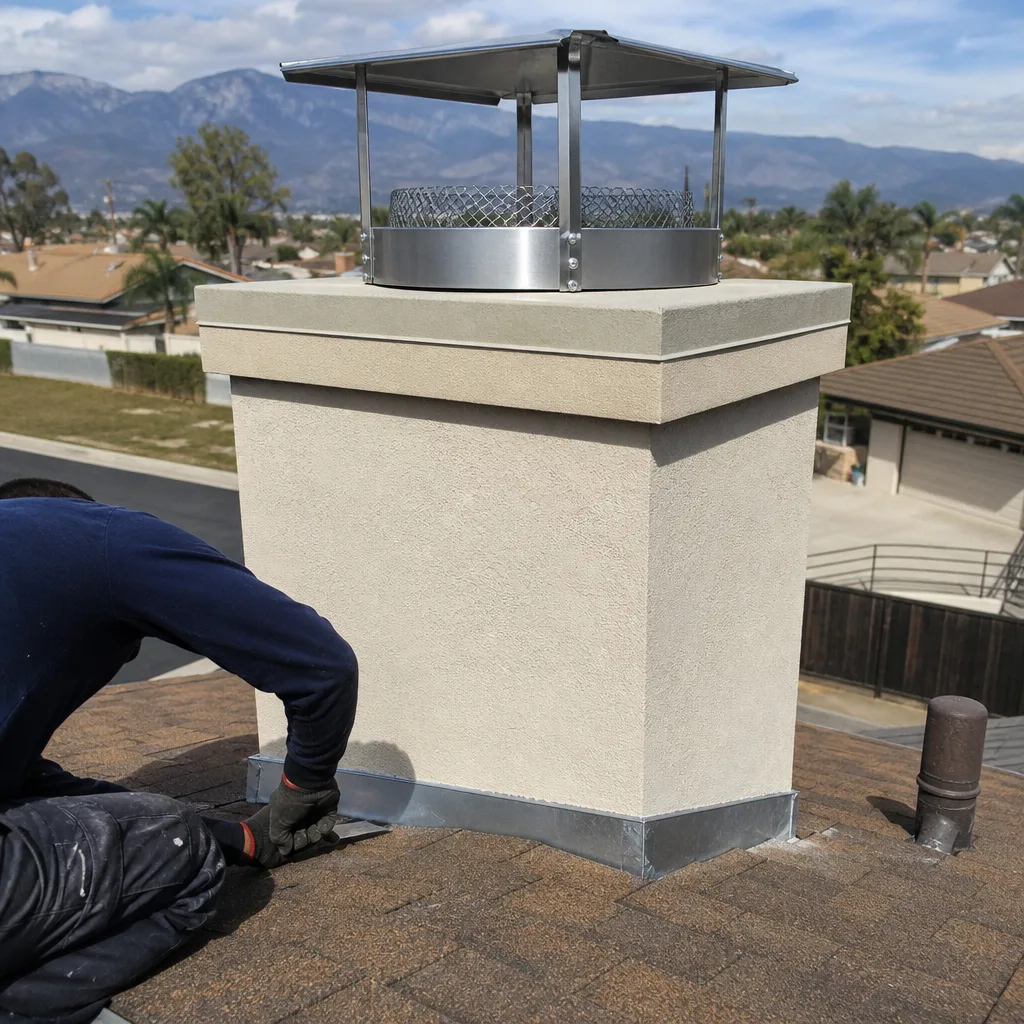
See the difference
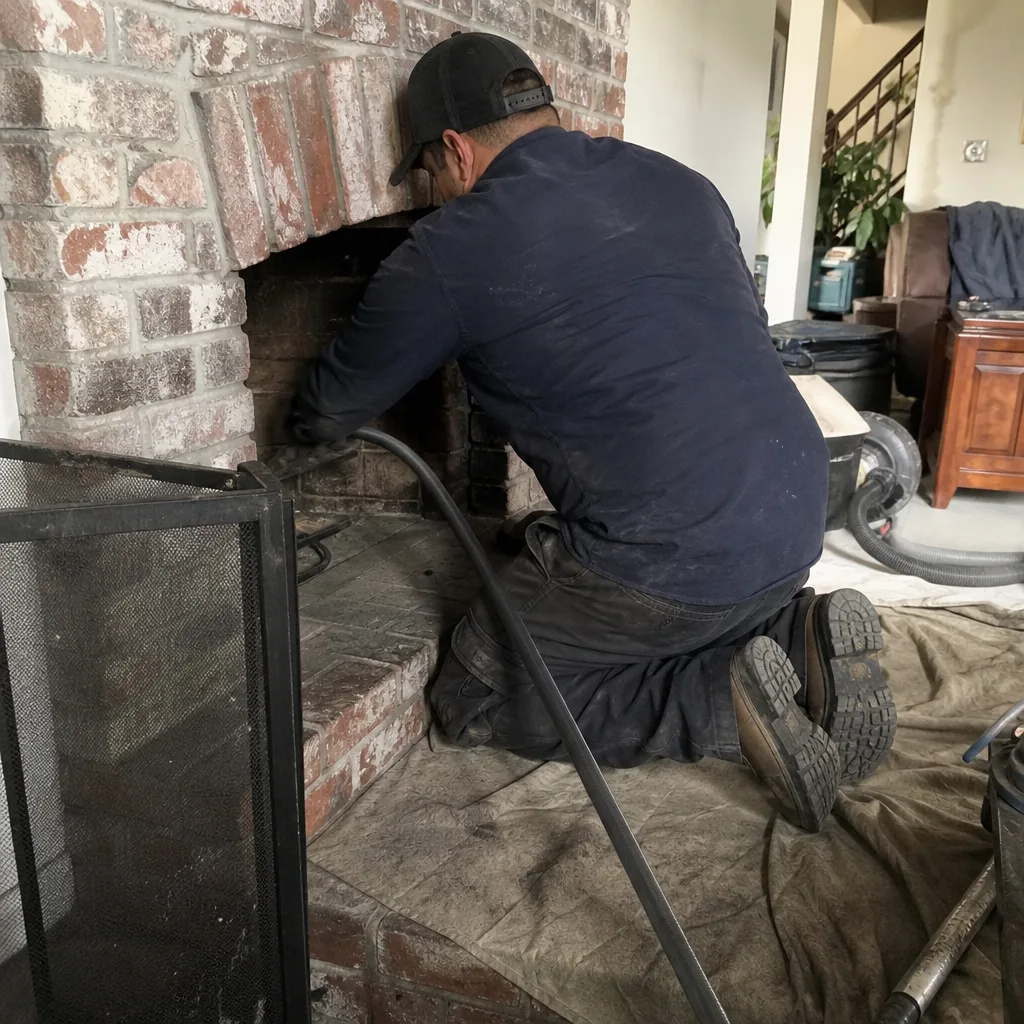 Before
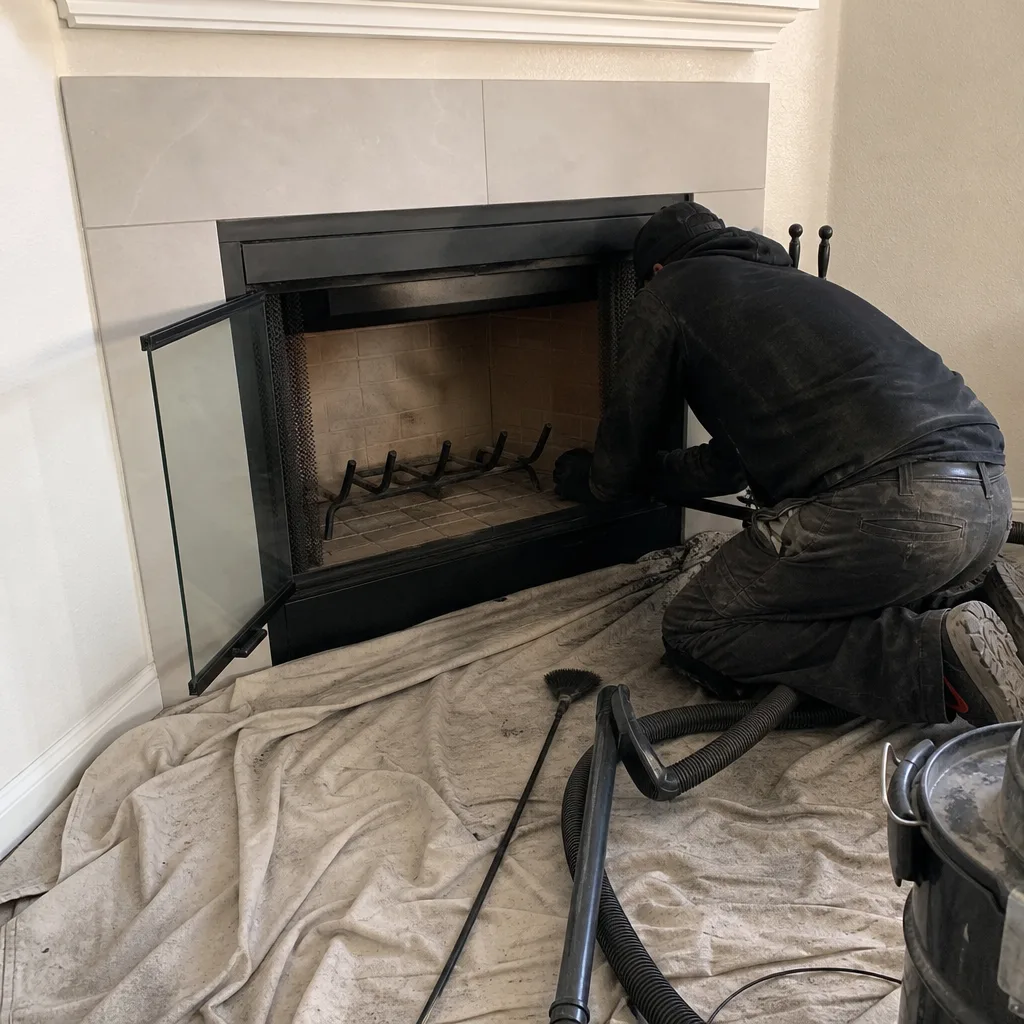 After
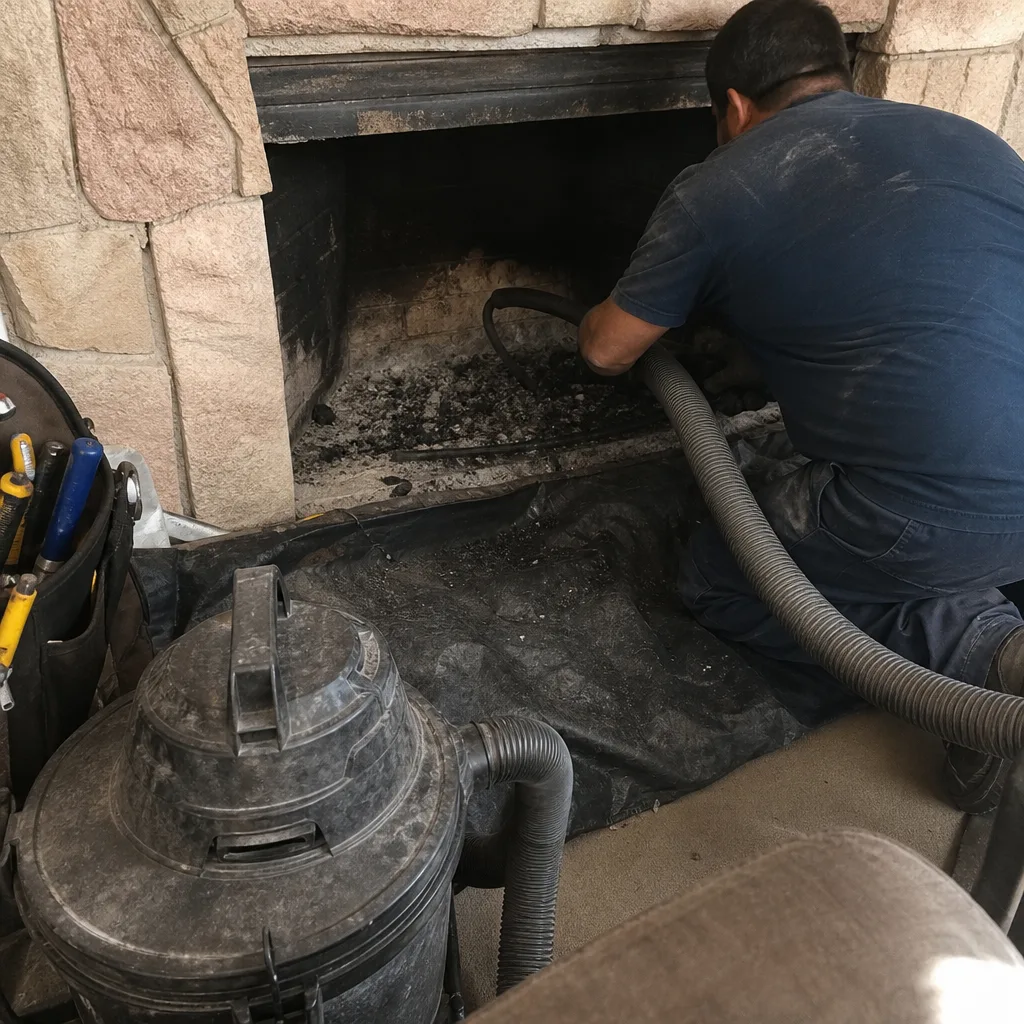 Before
 After
 Before
 After
When to Call a Professional
DIY vs Professional Chimney Cleaning: The Rialto Homeowner’s Decision Guide — chimney cleaning is not a DIY project, and the reasons are structural, not just technical. You cannot properly inspect your own flue from inside the firebox, you cannot safely access most Rialto rooflines without proper equipment and fall protection, and you cannot tell from a glance whether the liner is sound or compromised. The tools that matter, the rotary cleaning heads, the camera systems, the liner assessment equipment, are not items a homeowner owns or should buy for a once-yearly job.
Call a professional when you’re due for your annual cleaning, when you’ve bought a home with an existing fireplace, when you’ve had any of the warning signs described above, or when you’re switching fuel types. If you’re in Rialto, Chestnut Chimney Sweep offers free estimates. Call (855) 360-4975 and we’ll assess your system honestly, show you what we find, and quote the work your chimney actually needs, whether that’s a simple sweep or a recommended liner assessment.
Frequently Asked Questions
A standard chimney sweep in Rialto costs between $189 and $275, with rotary treatment for glazed Creosote running $275 to $350. The final price depends on your flue condition, liner type, and whether a Level 2 camera inspection is included. Call (855) 360-4975 for a flat-price quote based on your specific system.
Not necessarily. Minor cracking in a clay liner can often be addressed with HeatShield restoration, a ceramic resurfacing process that rebuilds the liner in place without full replacement. If the liner is severely deteriorated or has separated, a full DuraFlex stainless reline is the appropriate fix. The only way to know which path applies is a camera inspection.
Annually for any wood-burning fireplace, regardless of usage frequency, because Rialto’s low-use patterns produce glazed creosote and environmental debris accumulates independently of fire activity. Gas fireplaces can typically go two years between cleanings. Unused fireplaces should be inspected at least every other year.
Creosote builds in layers, glazes under low-temperature conditions, and eventually creates a fuel load that can ignite as a chimney fire. Environmental debris from Rialto’s palm and eucalyptus trees adds to that load, and without inspection you won’t know the liner’s condition. Skipped cleanings mean accumulated risk, and the repair costs compound as liner damage progresses.
You can physically brush the flue from below, but you cannot inspect the smoke chamber, you cannot assess liner integrity from the firebox, and you cannot safely work from most Rialto rooftops without proper fall protection. The visible portion of the flue is only part of the system, and the parts you can’t see are where failures begin. A professional cleaning includes an inspection you cannot replicate.
Yes, every two years at minimum. Gas systems produce less creosote but still generate soot and combustion byproducts, and environmental debris enters gas flues just as it enters wood-burning ones. The inspection also checks the venting, burner, and gas log set, all of which need periodic attention. Call (855) 360-4975 to schedule a gas system cleaning and inspection.
The Bottom Line
Chimney cleaning in Rialto is annual maintenance grounded in a simple fact: our climate fouls flues whether you burn fires or not. Low-frequency use creates glazed creosote, Santa Ana winds deposit sand and debris in uncapped flues, and the palm and eucalyptus trees that define our older neighborhoods contribute flammable material to every unprotected chimney. The right response is a yearly cleaning with a real inspection, performed by a technician who can assess liner condition and recommend repair only when the camera footage proves it’s needed. One call covers chimney and dryer vent, two of the most overlooked fire hazards in a home. We carry DuraFlex, Copperfield, and HeatShield products because the parts matter as much as the labor. Clean flue. Safe home. Done right. Explore more guides & resources.
For more on our cleaning process, see Chestnut Chimney Sweep home. For dryer vent service, see Dryer Vent Cleaning in Rialto.
Written by the team at Chestnut Chimney Sweep, serving Rialto since 2012.