Last updated October 30, 2026
 Sweep & inspection
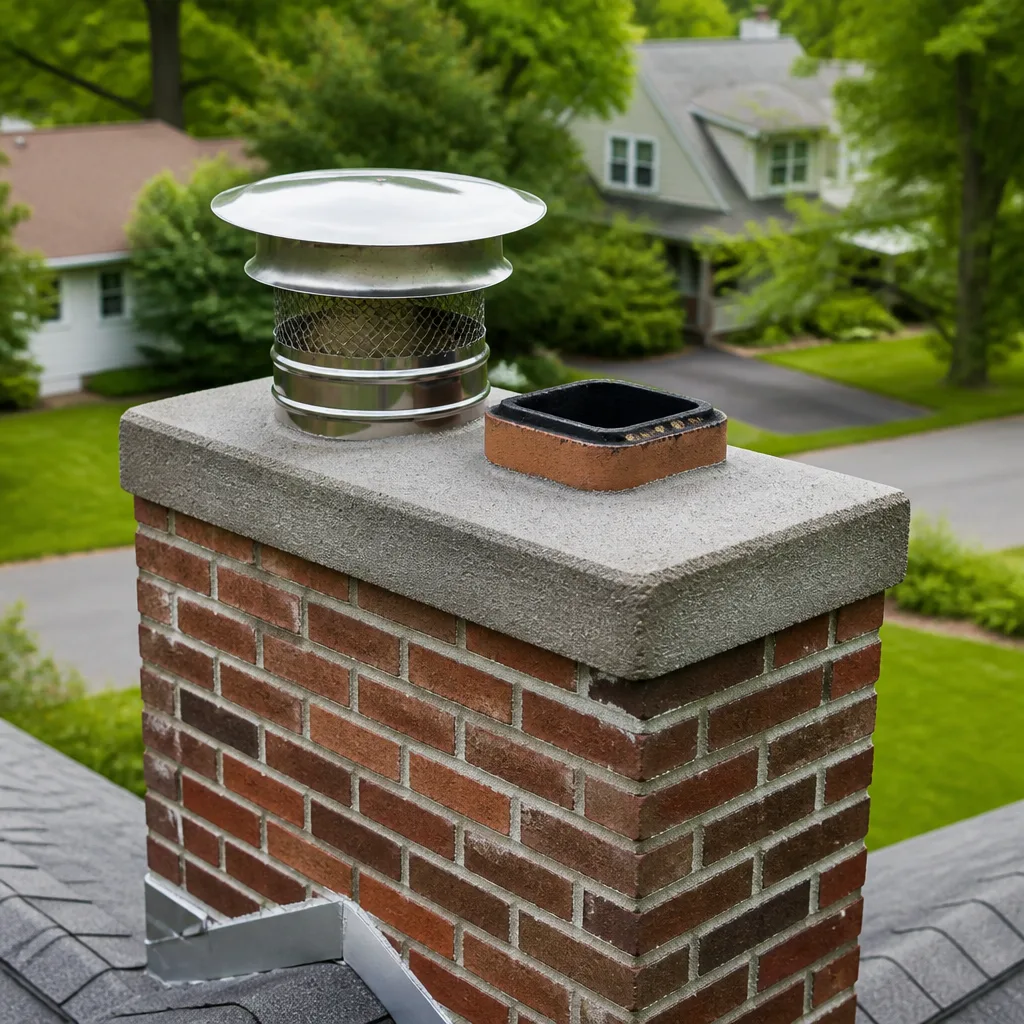
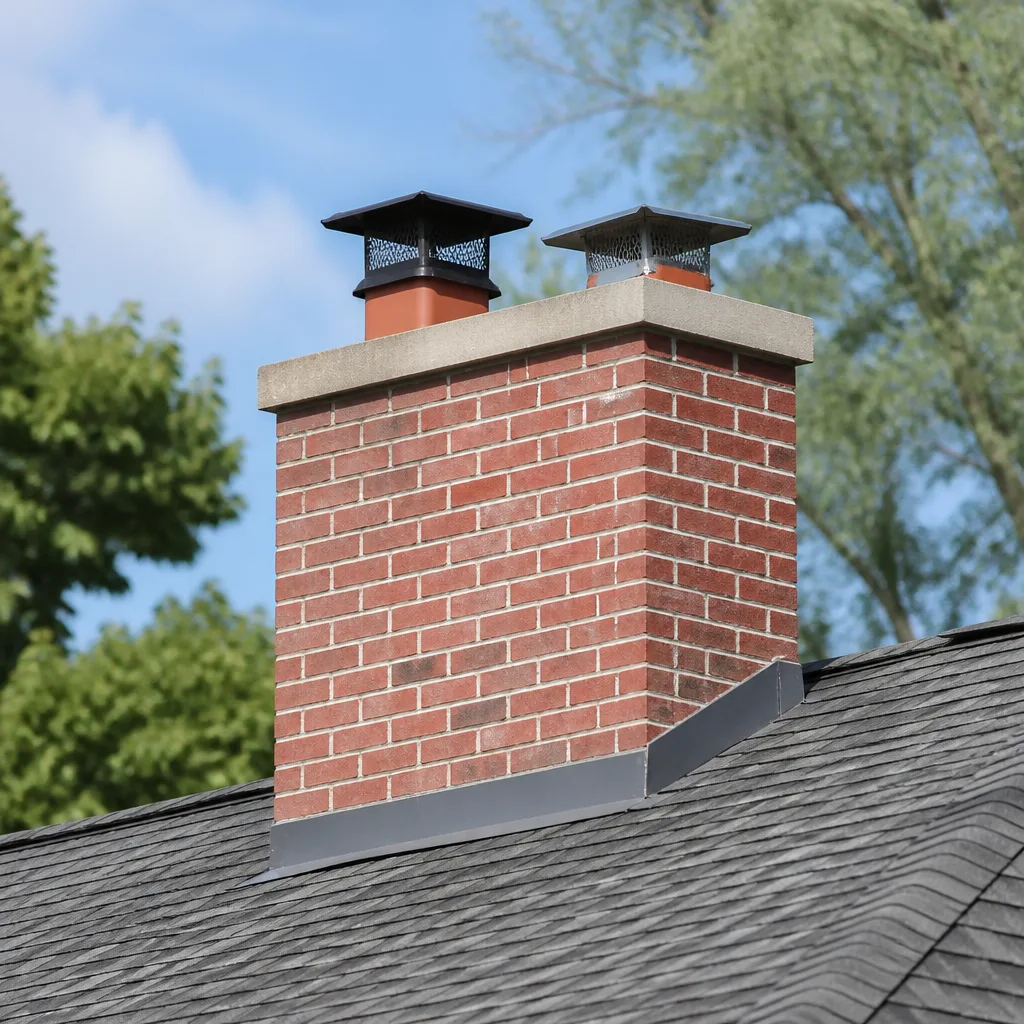 Caps & crowns
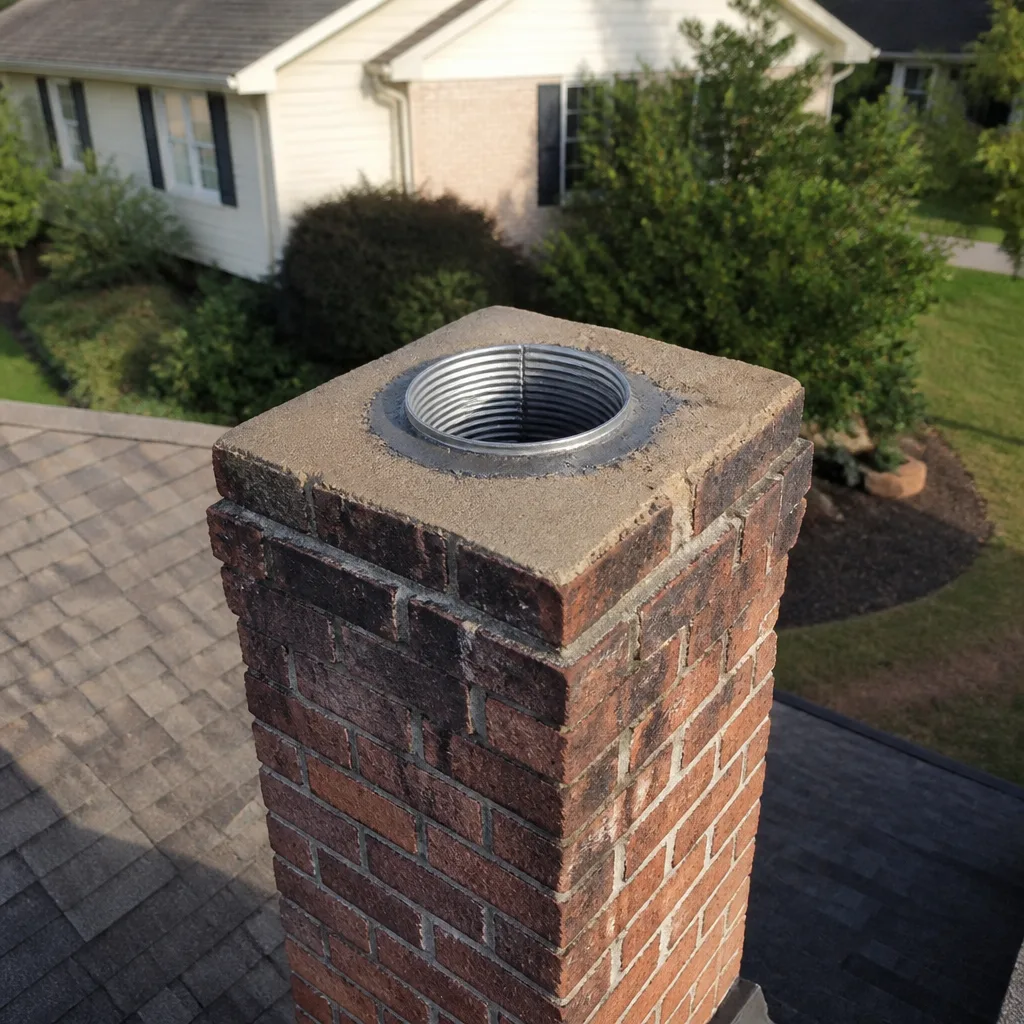 Flue relining
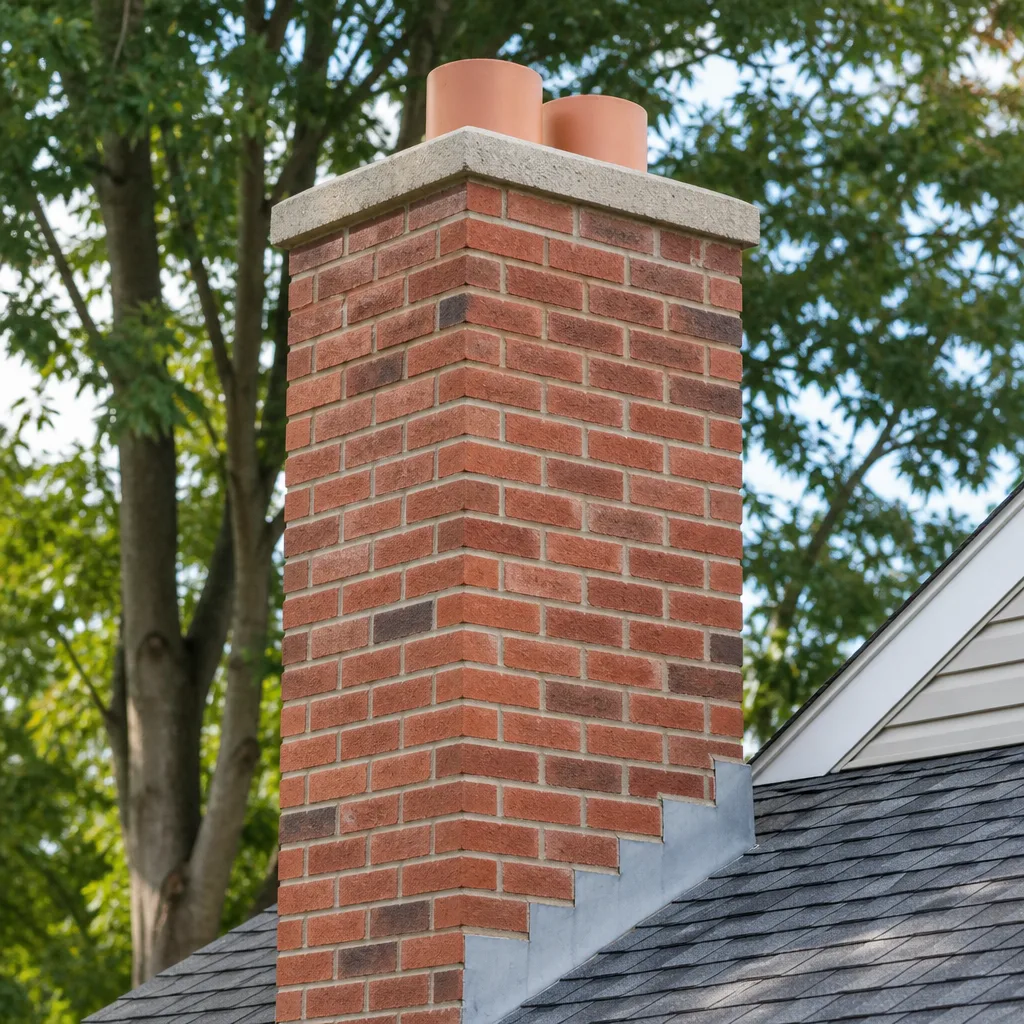 Masonry repair
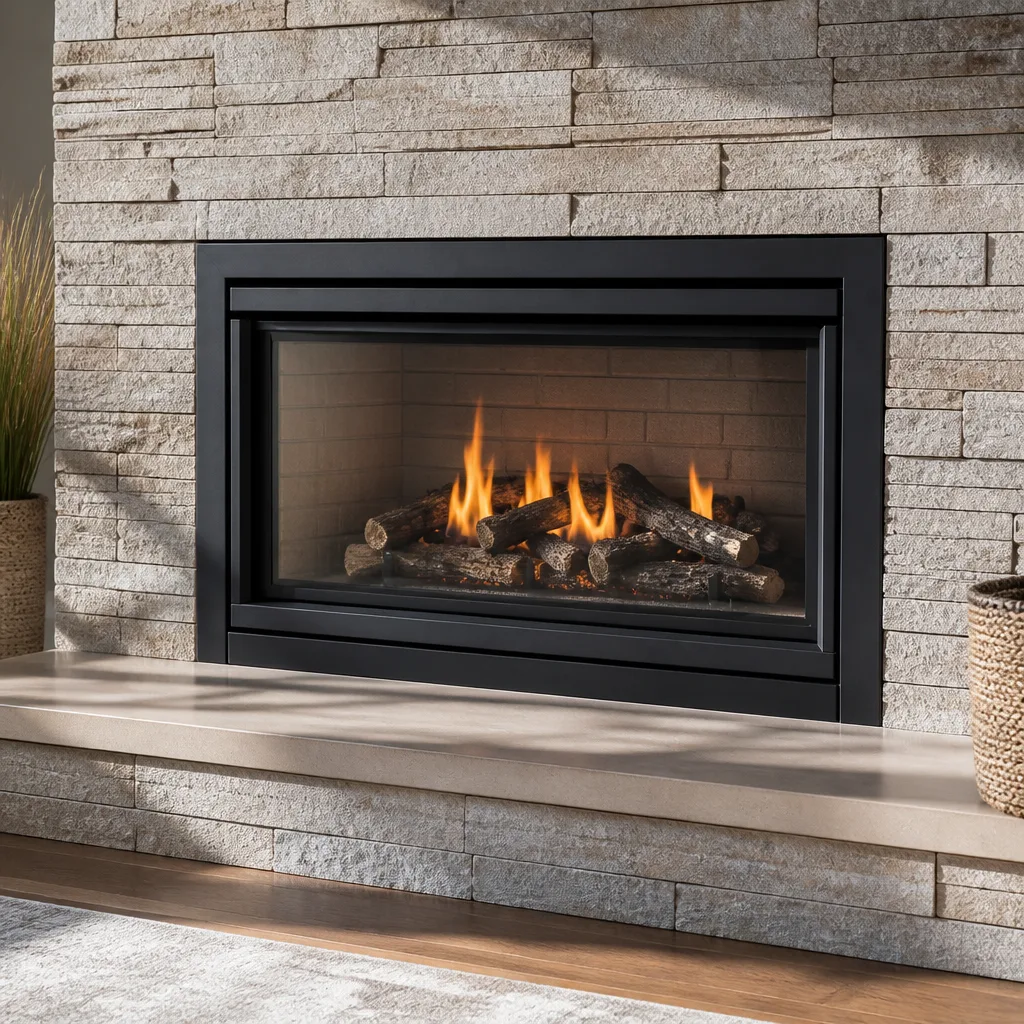 Gas fireplace service
Level 1 sweep and inspection to the NFPA 211 annual standard - flue, crown, cap, and flashing checked and photographed
Chimney sweep logs do not sweep chimneys. They loosen some creosote - which then falls where a brush and vacuum still have to collect it.
DIY vs Professional Chimney Cleaning: The Rialto Homeowner’s Decision Guide
Here’s a number that should make any Rialto homeowner pause: the National Fire Protection Association reports that roughly one in four home heating fires involves a chimney or fireplace, and the leading cause is creosote buildup. That’s not a scare statistic. It’s the reason a $25 brush kit from the hardware store feels like responsible home maintenance. But here’s what nobody tells you in the brush aisle: the tool you’re about to use removes loose soot and nothing else. It cannot see a cracked flue tile, cannot chemically break down hardened creosote, and cannot tell you whether last winter’s rain has been leaking through a failed cap seal onto your smoke shelf since January. This guide walks the honest line between what makes sense to do yourself and what quietly stops making sense the moment you understand what’s actually inside your chimney, and you can explore more guides & resources when you’re ready to go deeper. For homeowners in Rialto, where winter fires happen for maybe three months and the flue sits dormant for nine, the stakes are different than they are in snow country. We’ll cover all of it: what brushes do, what they can’t, what creosote looks like at each stage, what a professional sees with a camera, and how insurance companies look at self-performed chimney work. By the end, you’ll know exactly which category your chimney falls into.
Styles & brands we work with
Quick Answer
Most Rialto homeowners can safely handle visual firebox ash removal and basic exterior cap checks, but a true chimney cleaning involves removing creosote at all stages, inspecting the liner for cracks and gaps, checking the cap and flashing, and verifying draft. A DIY brush handles only loose, stage 1 creosote. It cannot detect or fix the problems that actually cause chimney fires and water damage. For anything beyond light surface soot, call a professional with camera inspection equipment.
Table of Contents
- What a DIY Brush Actually Accomplishes
- The Creosote Stage Problem: What You’re Looking At
- The Equipment Gap: Tools Professionals Bring That You Can’t Buy
- What a Camera Sees That You Cannot
- California Insurance and Liability: What Your Fire Claim Looks Like
- When DIY Is Genuinely Appropriate
- When DIY Is False Economy
- Common Mistakes to Avoid
- When to Call a Professional
- Frequently Asked Questions
- The Bottom Line
What a DIY Brush Actually Accomplishes
Let’s be precise about what a chimney brush does, because the precision matters. A wire or poly brush attached to rods, pushed up and down through the flue, mechanically scrapes the inner walls. That’s it. The brush dislodges loose, flaky creosote and soot that hasn’t bonded to the flue surface. If you’ve burned properly seasoned hardwood and had your chimney cleaned within the last year or two, a DIY brushing between professional cleanings can remove the light, dusty layer that accumulates. It’s a maintenance pass, not a cleaning.
The physical limitation is simple geometry and chemistry. A brush makes contact with whatever it can touch. But flues aren’t perfect cylinders. Clay tile liners have mortar joints that create ridges and recesses. Prefabricated metal chimneys have seams. Creosote collects in those irregularities. A brush glides over the high points and leaves deposits in the low points. More important, a brush cannot exert the kind of pressure or friction needed to remove creosote that has undergone chemical changes from repeated heating and cooling cycles. Once creosote hardens, it behaves less like soot and more like a resin. You’re not sweeping it. You’re trying to sand it off. A hand brush doesn’t sand.
There’s another limitation that rarely gets discussed: visibility. When you run a brush up from the firebox, you cannot see the upper third of the flue, the smoke shelf, the damper assembly, or the cap. You’re working blind. If the brush dislodges a chunk of creosote that falls and blocks the smoke shelf, you won’t know. If your liner has a crack in the upper section, you won’t see it. If a bird built a nest just below the cap, you might dislodge part of it while leaving the rest. The brush physically cannot give you information about the condition of the system. It can only move debris around inside a dark space you can’t inspect.
The Creosote Stage Problem: What You’re Looking At
Creosote isn’t one substance. It’s a class of deposits that forms differently depending on flue temperature, wood moisture, and airflow. Chimney professionals classify it in three stages, and knowing which stage you’re dealing with is the single most important factor in the DIY-versus-professional decision.
Stage 1: Flaky soot. This is the layer most people picture. It’s dry, black or brown, and has a texture like coffee grounds or fine ash. It forms at flue temperatures above 250 degrees Fahrenheit, which is what you get with a hot, efficient fire burning dry wood. A brush removes stage 1 creosote. This is the only stage where DIY brushing is genuinely effective. If you can wipe your finger through the deposit and it flakes away like dust, you’re looking at stage 1.
Stage 2: Tar-like flakes. This forms at lower flue temperatures, between roughly 150 and 250 degrees. The creosote doesn’t fully combust; it condenses as a thicker, shinier deposit with a texture like dried molasses or flaky granola. Stage 2 creosote clings. A brush will remove some of it, but it will leave a sticky residue behind. Professional treatment at this stage typically involves chemical agents like a creosote modifier (Poultice Creosote Remover, for example) applied and left to dwell before mechanical sweeping. The chemical breaks down the tar compounds and makes them brittle enough to remove. This is not something a homeowner buys off a shelf at the Rialto hardware store, and spraying a creosote log into an already-dirty chimney doesn’t solve it either.
Stage 3: Glazed creosote. This is the dangerous one. It looks like a glossy black coating, almost like tar that has cooled and hardened into a candy shell. It forms from repeated low-temperature fires, unseasoned wood, or restricted airflow causing condensation on the flue walls. Once glaze forms, it’s nearly impossible to remove with a manual brush. Professionals use rotary power sweeping systems with chains or whip heads that spin at high speed and physically grind the glaze off the liner surface. Some glazed deposits require chemical treatment first, then rotary removal. A DIY brush will do nothing to stage 3 creosote except polish the surface slightly while you remain convinced you’ve cleaned the chimney. Glazed creosote is also the most fire-hazardous: it’s a concentrated fuel source bonded to the flue walls, and it ignites at a lower temperature than you’d expect.
How to tell which stage you’re looking at: shine a bright flashlight up the flue with the damper open. Stage 1 looks dusty. Stage 2 looks like textured tar. Stage 3 looks like wet glass. If you can’t tell because you can’t see the upper flue, that’s your answer: you don’t know what stage it is, and that lack of information is why the professional call gets made. In Rialto, where many homes have fireplaces that get used sporadically, stage 2 is especially common. The fire starts cold, burns for a few hours, and never reaches the sustained high temperatures that would burn off the deposits. That’s the profile of a chimney that builds stage 2 creosote year over year without obvious signs until a professional looks.
The Equipment Gap: Tools Professionals Bring That You Can’t Buy
Chimney sweeping is not a mystery trade. The reasons to hire a professional are not secret knowledge or ancient guild secrets. They’re mechanical and optical. A professional arrives with equipment that doesn’t exist on the consumer market, and each piece of it exists to solve a specific problem a brush can’t.
Rotary power sweeping systems. These are motor-driven units with flexible rods and specialized heads (chains, whips, or fixed loops) that spin at high RPM. The spinning action scrubs the flue walls far more aggressively than any hand brush, and it removes stage 2 and stage 3 deposits that would shrug off a manual brush. The flexible rods also conform to flue offsets and bends that would defeat a rigid brush kit. This equipment costs thousands of dollars and requires training to use without damaging the liner.
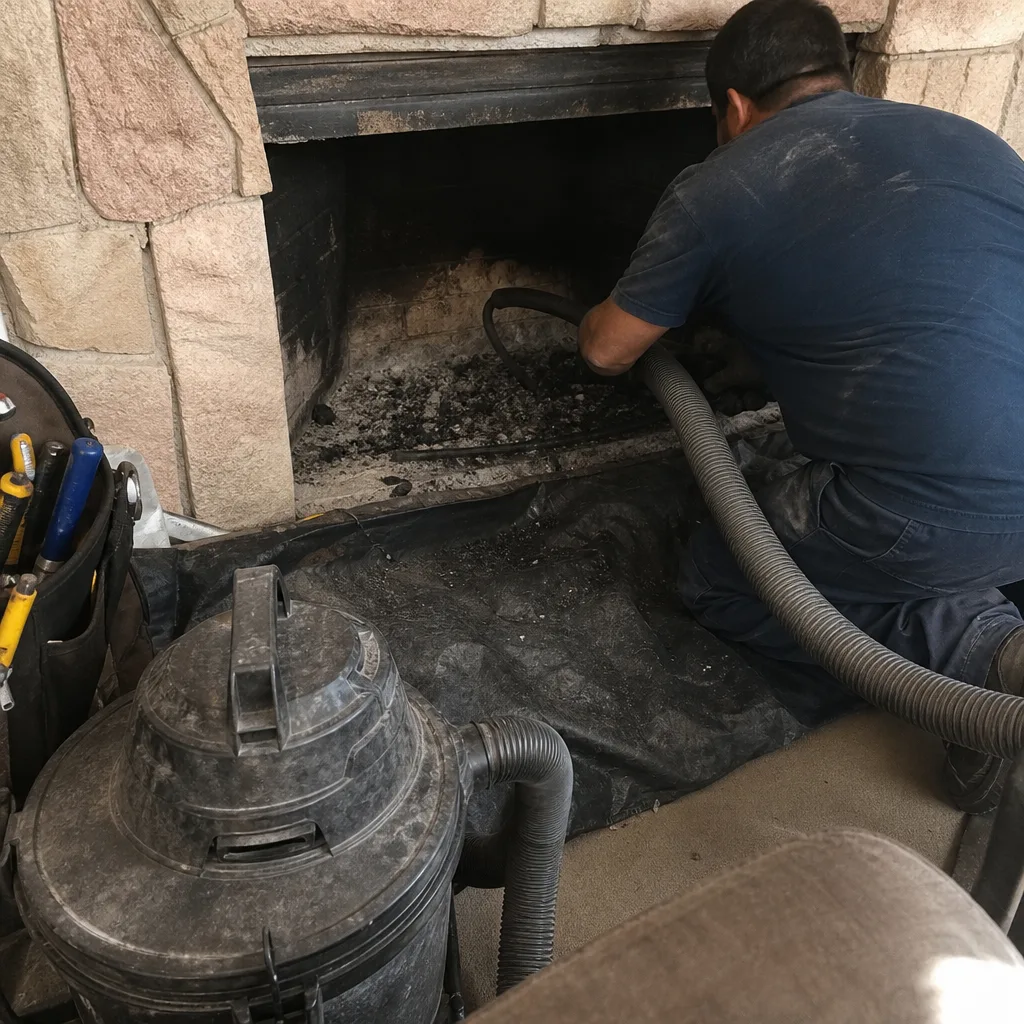
Commercial vacuums with HEPA containment. The dust generated during a chimney cleaning is not ordinary household dust. It’s fine particulate creosote, which is an irritant and a carcinogen at sufficient exposure. A professional sweep brings a high-volume vacuum system (often 1,800 to 2,500 CFM) with HEPA filters that keep the soot from entering your living space. A shop vac will not do this. A shop vac’s filter clogs within minutes, and the fine particles blow straight through the exhaust back into your house. If you have ever swept a fireplace and watched a film of black dust settle on the furniture, that’s why.
Video inspection cameras. This is the biggest gap. A professional sweep pushes a small camera up the flue and records the entire liner surface in real time. You see the condition of the tiles, the mortar joints, any gaps, any cracks, any animal intrusion, any water stains. No amount of brushing will tell you that your liner has a hidden crack. The camera does. Chestnut Chimney Sweep uses this approach on every cleaning because the sweeping alone isn’t the deliverable: the information about your chimney’s condition is. A lot of homeowners in Rialto have never seen the inside of their own flue. The camera changes that.
Proper tarps, drop cloths, and staging equipment. Accessing a chimney safely means ladders, roof harnesses, and protection for the living space below. Most Rialto homes have pitched roofs and caps that require climbing with equipment. A professional arrives with the setup to do that without tracking creosote through your living room.
What a Camera Sees That You Cannot
The single most valuable ten minutes of a professional chimney cleaning happens after the sweeping. The technician runs a video camera up the flue and looks at things no brush can ever reveal. If you’re trying to decide whether DIY is enough, ask yourself: when was the last time anyone actually looked at the inside of your chimney? Not brushed it. Looked at it. For most Rialto homeowners, the answer is never.
Here’s what the camera finds, and what each finding means:
- Liner cracks and spalling. Clay tile liners crack from thermal stress, especially in climates like Rialto’s where exterior temperatures swing from 100-degree summers to 35-degree winter nights. A cracked tile exposes the chimney masonry to heat and gases. If the crack goes unnoticed, the chimney can still function, badly, for years before failing. The camera catches the crack when it’s repairable.
- Missing or deteriorated mortar joints. Between each tile is a mortar joint. Over time, mortar degrades and falls out. The gaps allow heat and gases to reach the chimney structure. In older Rialto homes with original masonry chimneys, this is common.
- Stage 3 glazed creosote. The camera confirms what the brush couldn’t touch. If glaze is present, you need a rotary sweep and possibly chemical treatment. No homeowner-owned tool addresses this.
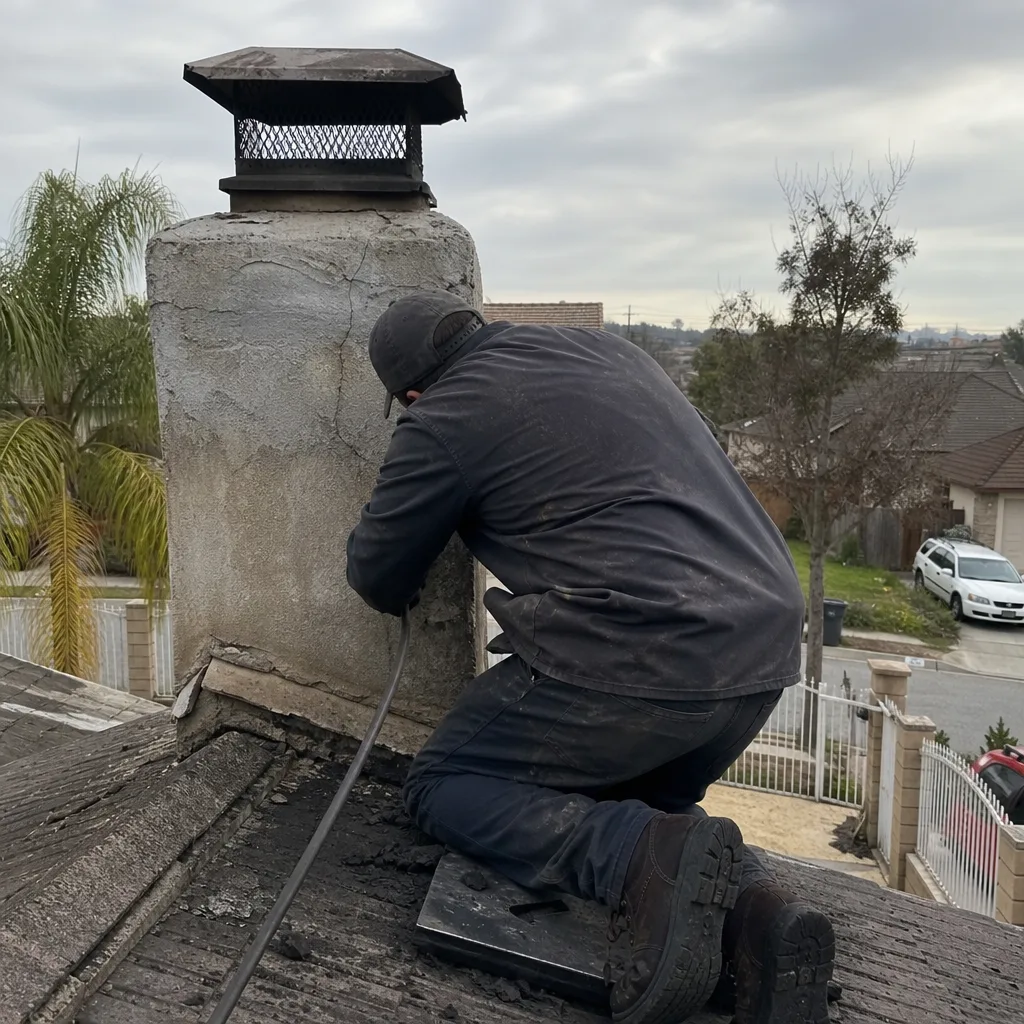
- Water intrusion evidence. Rust streaks, efflorescence, dark staining on the smoke shelf: these indicate the cap or flashing has failed and water has been entering. Water damage worsens every winter, and by the time it shows as a ceiling stain in your living room, the repair is far more expensive than the cap replacement would have been.
- Animal entry. Rialto’s warm climate and mature trees mean birds, squirrels, and raccoons find chimneys attractive. A nest partially obstructs the flue; it’s a fire hazard and a carbon monoxide hazard. The camera confirms the flue is clear.
- Previous poor repairs. Some Rialto chimneys have been patched over the years with mortar that wasn’t rated for flue use. The camera exposes those patches. Knowing they’re there is the difference between a working chimney and one that leaks gases into the wall cavity.
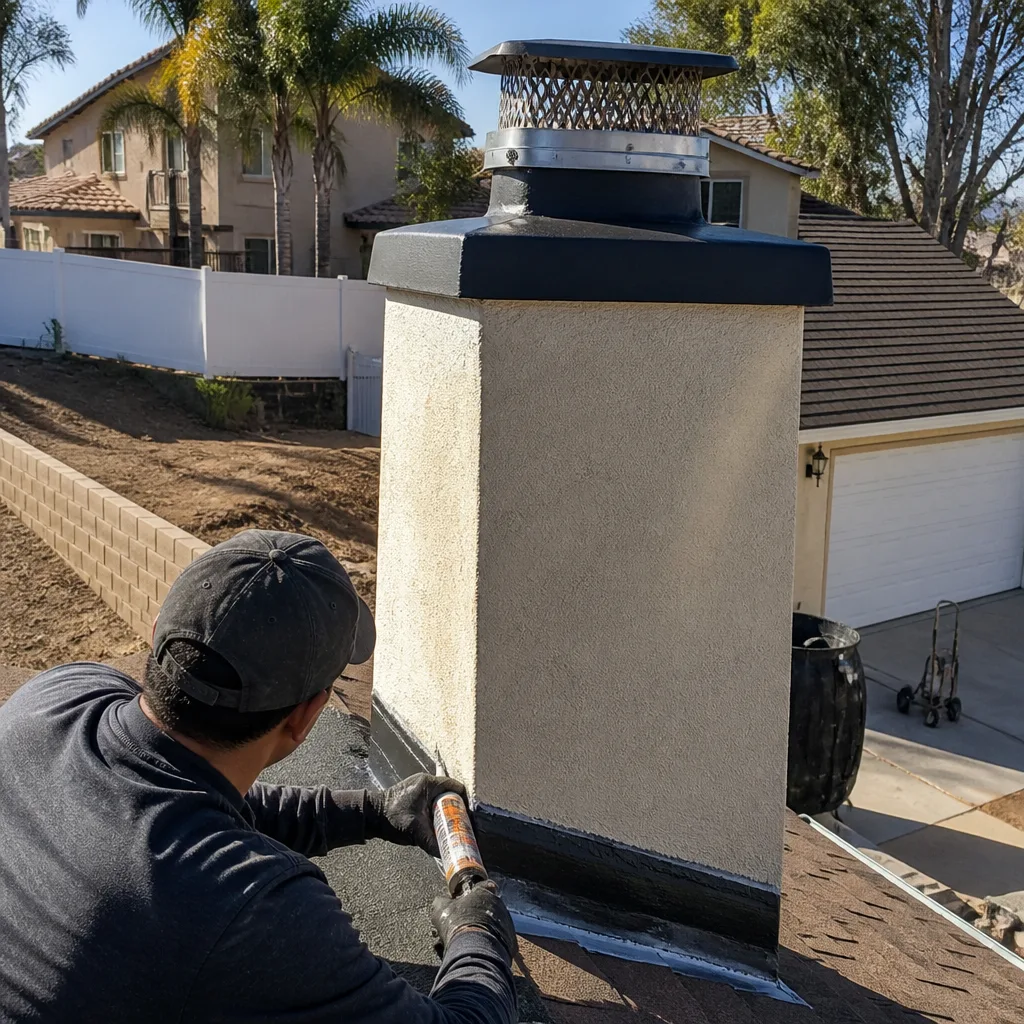
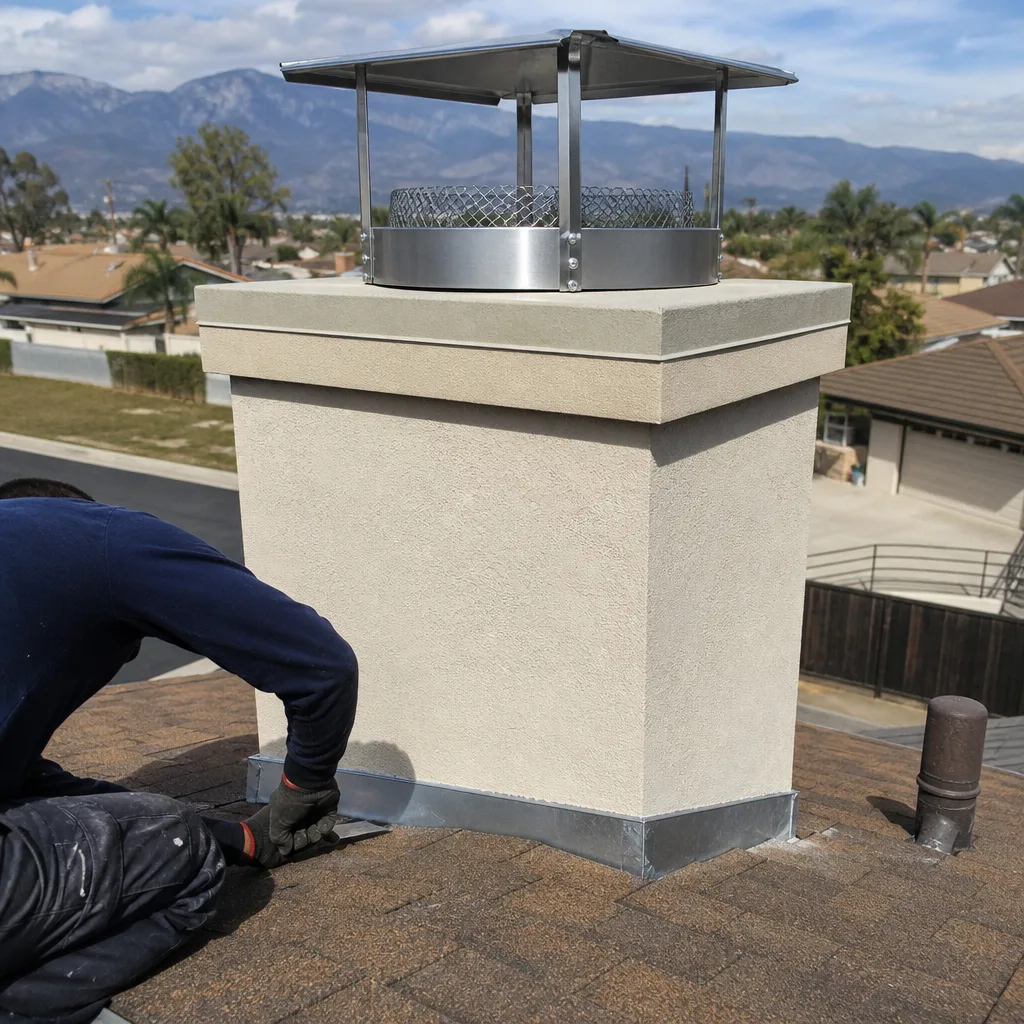
We work with professional-grade components, including DuraFlex liners and Copperfield caps, because the camera keeps showing us the same thing: cheap parts fail early. If your camera inspection reveals a damaged cap or a liner that’s reached the end of its life, the repair should use components that are made for the specific duty. We specify the right liner, cap, or repair product for your system by name.
California Insurance and Liability: What Your Fire Claim Looks Like
This is the part of the DIY chimney conversation that gets skipped, and it shouldn’t. In California, if a fire starts in your chimney, your homeowner’s insurance company is going to ask questions. One of the first questions will be: when was the chimney last professionally cleaned and inspected? If your answer is “I cleaned it myself with a brush kit,” the claim does not get denied automatically. But it gets scrutinized. Here’s why.
Insurance policies for California homeowners typically require that homeowners maintain their property against known hazards. Creosote accumulation is a known hazard. A professional cleaning generates a record: an invoice, a date, a service that can be used to demonstrate that you maintained the chimney per industry standards. The industry standard, set by the Chimney Safety Institute of America and referenced by insurance adjusters, is that chimneys should be inspected annually and cleaned as needed. A DIY brushing generates no such record. If a fire occurs, the adjuster has no independent evidence that the chimney was in safe condition at the time of the incident.
Worse, if the fire investigation determines that the fire was caused by creosote ignition and you had not had a professional inspection, the carrier may argue that you failed to maintain the property. Some policies contain exclusions for losses caused by failure to maintain. The outcome varies by policy and circumstance, but the risk is real. A professional record is cheap compared to a denied fire claim.
There’s also the liability question on the repair side. If you attempt a DIY repair, such as patching a cracked cap or replacing a damper, and that repair fails, the consequences can extend beyond your own property. A chimney fire that spreads to adjacent structures in a dense Rialto neighborhood can involve multiple insurance policies and multiple adjusters, all of whom will be examining the maintenance history. The record, or lack of it, becomes evidence. Chimney repair in Rialto is not a trade where guesswork is covered by good intentions. The work either meets code, or it creates a hidden hazard that may not reveal itself until a fire happens.
When DIY Is Genuinely Appropriate
There are exactly two situations where we tell Rialto homeowners that doing it yourself is the right call. Both are safe, both are accessible, and both violate nothing with your insurance company.
- Visual firebox ash removal. After your fires are done for the season, scoop the loose ash out of the firebox with a dedicated ash shovel and a metal bucket. Wear a dust mask. Don’t vacuum it with a household vacuum; the fine ash will destroy the motor and blow particulate into the air. This is housekeeping, not chimney cleaning. It doesn’t touch the flue, but it keeps the firebox clean and ready for next season.
- Exterior cap checks. You can, from the ground or a safe ladder position, visually inspect the cap and chase cover for obvious rust, bird nests, or missing components. If you see a rusted-through cap or a missing spark arrestor screen, that’s useful information. You don’t need to fix it yourself; you need to call for a replacement. But identifying the problem before it gets worse is genuinely helpful.
That’s the list. Everything else: brushing the flue, inspecting the liner, evaluating creosote stages, checking the smoke shelf, verifying draft, replacing the cap, repairing the flashing, patching mortar, installing a liner. Those are not DIY tasks. Not because you’re incapable, but because the tools, the training, and the record-keeping exist for a reason.
When DIY Is False Economy
False economy is when spending $30 to save a $200 service call ends up costing you $3,000 in liner repair or a fire claim. Here are the five situations where DIY chimney work is false economy, and why.
- You’re brushing stage 2 or stage 3 creosote. You spend an afternoon, make a mess, and leave the actual hazard untouched. The chimney looks clean at the bottom, glazed and risky at the top. You’ve paid in time and false confidence. Call a pro instead.
- You skipped the inspection entirely. Cleaning without inspecting is like changing your car’s oil without checking whether the head gasket is leaking. The sweep is the bare minimum; the inspection is where the value lives. A professional chimney sweep in Rialto includes both.
- You attempted a cap repair with a hardware-store universal part. Universal caps rarely fit properly. A badly fitted cap leaks, and the leak stays hidden until the smoke shelf rots. The right cap is specific to your flue size and chimney type. We install Copperfield caps because they’re made for specific flue dimensions, not generic one-size-fits-none applications.
- You poured water down the flue to “clean” it. This damages the liner, soaks residual creosote into the masonry, and accelerates deterioration. No professional does this. No homeowner should either.
- You used a creosote sweeping log as a substitute for cleaning. These products claim to reduce creosote. At best, they loosen stage 1 deposits so they flake off. At worst, they make stage 2 deposits more brittle while leaving them attached, creating a situation where chunks fall and block the flue or smoke shelf. They are not a cleaning. They are not an inspection. They cannot tell you anything about your liner’s condition.
Common Mistakes to Avoid
- Buying a brush kit without knowing your flue size. Brushes come in specific diameters matched to flue dimensions. A brush that’s too small does nothing; a brush that’s too large can wedge and get stuck. If you don’t know your flue diameter, you don’t know which brush to buy, and guessing is how brushes get abandoned halfway down a flue.
- Cleaning a chimney that hasn’t been inspected first. If your flue has a cracked tile, running a brush through it can dislodge loose material and worsen the damage. The inspection should come first. Always.
- Forgetting the smoke shelf and damper area. These areas collect creosote and debris but are nearly impossible to clean properly from below without specialized equipment. Most DIY jobs leave them untouched, which means the chimney still has significant creosote load even after the flue walls look cleaner.
- Using unseasoned wood and then blaming the chimney. In Rialto, firewood is often bought from roadside sellers who don’t season it properly. Wet wood produces low-temperature fires, which produce stage 2 creosote faster than anything else. Burn wood that’s been split and stacked for at least six to twelve months under cover.
- Ignoring the dryer vent. Most Rialto homes have electric or gas dryers, and dryer vents accumulate lint that can ignite. This is a separate combustion safety issue from your chimney, but it’s part of the same overall fire-safety picture. If your dryer takes two cycles to dry a load, that’s blocked airflow, and blocked airflow is how lint fires start. Dryer vent cleaning in Rialto is a fire safety service, not an add-on.
- Assuming the roof is safe to climb. Rialto’s residential roofs are typically Spanish tile or composition shingles on pitched slopes. Walking a tile roof without proper training breaks tiles and risks a fall. Chimney access is usually a ladder job from the roof edge or a confined area. The risk isn’t worth the $30 saved on a sweep.
- Treating the chimney as a standalone system. Your fireplace, your chimney cap, your flashing, your liner, and your dryer vent all connect to the same overarching concern: keeping combustion byproducts moving safely out of the house. A Chestnut Chimney Sweep home inspection considers the whole vertical stack, which is why one appointment can cover what three separate trades would otherwise handle.
When to Call a Professional
Call a professional when you see glossy black deposits in the flue, when water stains appear on the ceiling or walls near the fireplace, when there’s a smell of smoke even when the fireplace isn’t in use, when animals have been in the chimney, or when you haven’t had the chimney inspected in more than two years. Also call if you’ve moved into a Rialto home and have no records from the previous owner. An unmaintained chimney with an unknown history is the single strongest argument for a professional inspection before your first fire. Chestnut Chimney Sweep offers free estimates in Rialto, call (855) 360-4975.
Frequently Asked Questions
A professional chimney sweep in Rialto typically costs between $180 and $350 depending on the chimney’s height, accessibility, and creosote condition; see our Chimney Cleaning Cost Breakdown: The Rialto Homeowner’s Reference for 2026 for full pricing details. Homes with stage 2 or stage 3 creosote, steep roofs, or difficult cap access fall on the higher end. Most sweeps in the Inland Empire include the inspection and a basic report with the cleaning price. Call (855) 360-4975 for an exact quote: estimates are free.
The Chimney Safety Institute of America recommends cleaning when creosote reaches 1/8 inch of thickness, which for most Rialto homes that burn wood means once per year if you use the fireplace regularly. Gas fireplaces produce less creosote but still need annual inspection for venting and cap condition. Homes that burn only occasionally can go two years between cleanings if an inspection confirms the flue is clear. The inspection is what tells you the cleaning interval, not a calendar.
Bottom-up drill attachments exist, but they share the same fundamental limitations as any brush: they remove loose deposits but cannot remove hardened creosote, cannot inspect the liner, and cannot tell you anything about cap, flashing, or smoke shelf condition. They also generate dust that a shop vac cannot contain. A drill brush from the bottom in a house with a damaged liner is more likely to worsen the damage than to clean effectively.
Chimney sweeping logs can reduce stage 1 creosote by making it brittle enough to flake off, but they are not a replacement for mechanical cleaning. They do not remove stage 2 or stage 3 deposits, they do not inspect the liner, and they can create a situation where loosened creosote falls and blocks the smoke shelf. If you use one, have a professional inspection afterward to confirm the flue is clear.
Yes, but for different reasons. Gas fireplaces produce less creosote, but they still produce soot, and the primary concerns are venting blockages, cap deterioration, and moisture intrusion. A gas log set that burns with a yellow, lazy flame is often a sign of insufficient draft or a blocked vent. Annual inspection applies to gas as well as wood. The camera looks at the inside of the flue the same way.
Creosote accumulates in stages, and the timeline depends on how often you burn and what you burn. A few years of regular fires with unseasoned wood can produce enough stage 2 creosote to create a meaningful fire hazard. The chimney won’t necessarily look dirty from the firebox. The real risk is invisible: a glaze layer near the top of the flue that ignites at temperatures your chimney will reach during a normal fire. Call (855) 360-4975 for a camera inspection if it’s been more than two years: the cost of knowing is less than the cost of not knowing.
The Bottom Line
The DIY-versus-professional decision is not really about your ability to run a brush through a flue. It’s about what the brush cannot do. It cannot inspect. It cannot chemically treat hardened creosote. It cannot see a cracked liner or a failed cap seal. It cannot create a maintenance record that your insurance company will want to see if a fire happens. For Rialto homeowners, where fireplaces get occasional use and chimneys sit idle for most of the year, the most important step is not the cleaning itself. It’s the inspection that tells you whether the cleaning is even the issue. A professional sweep with a camera covers both. A DIY brushing covers neither. The right answer for most homes is straightforward: scoop the ashes yourself, check the cap from the ground, and call a professional for everything else. Call Chestnut Chimney Sweep at (855) 360-4975 for a free estimate in Rialto.
Written by the team at Chestnut Chimney Sweep, serving Rialto since 2012.
See the difference
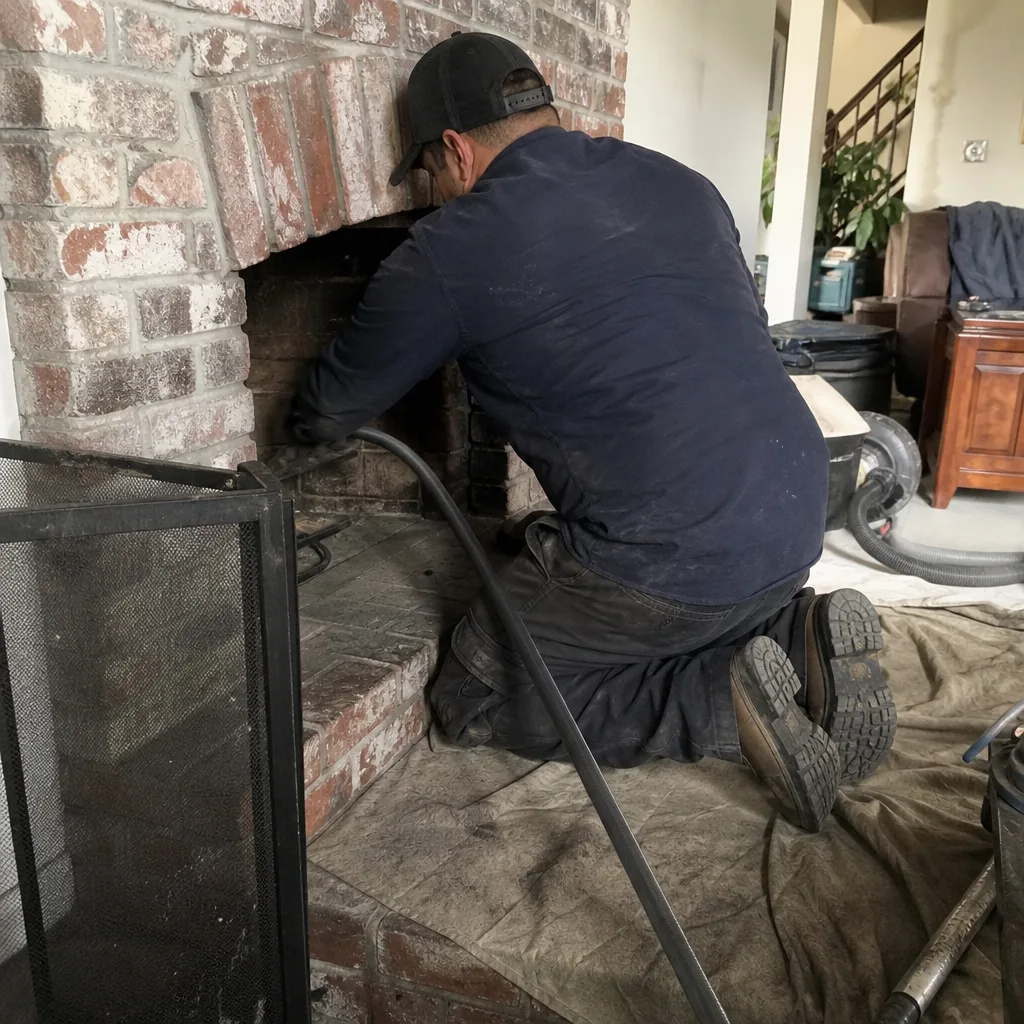 Before
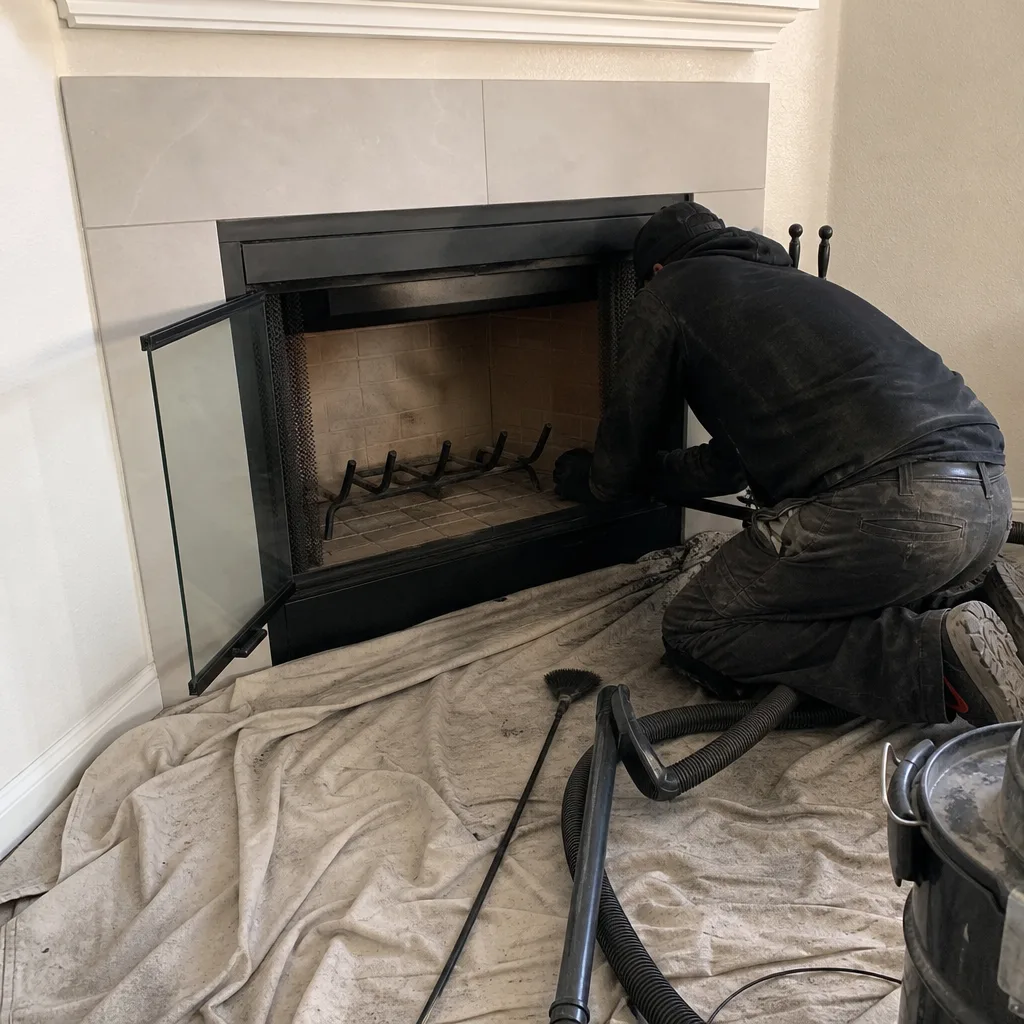 After
 Before
 After
 Before
 After