Last updated October 30, 2026
 Sweep & inspection
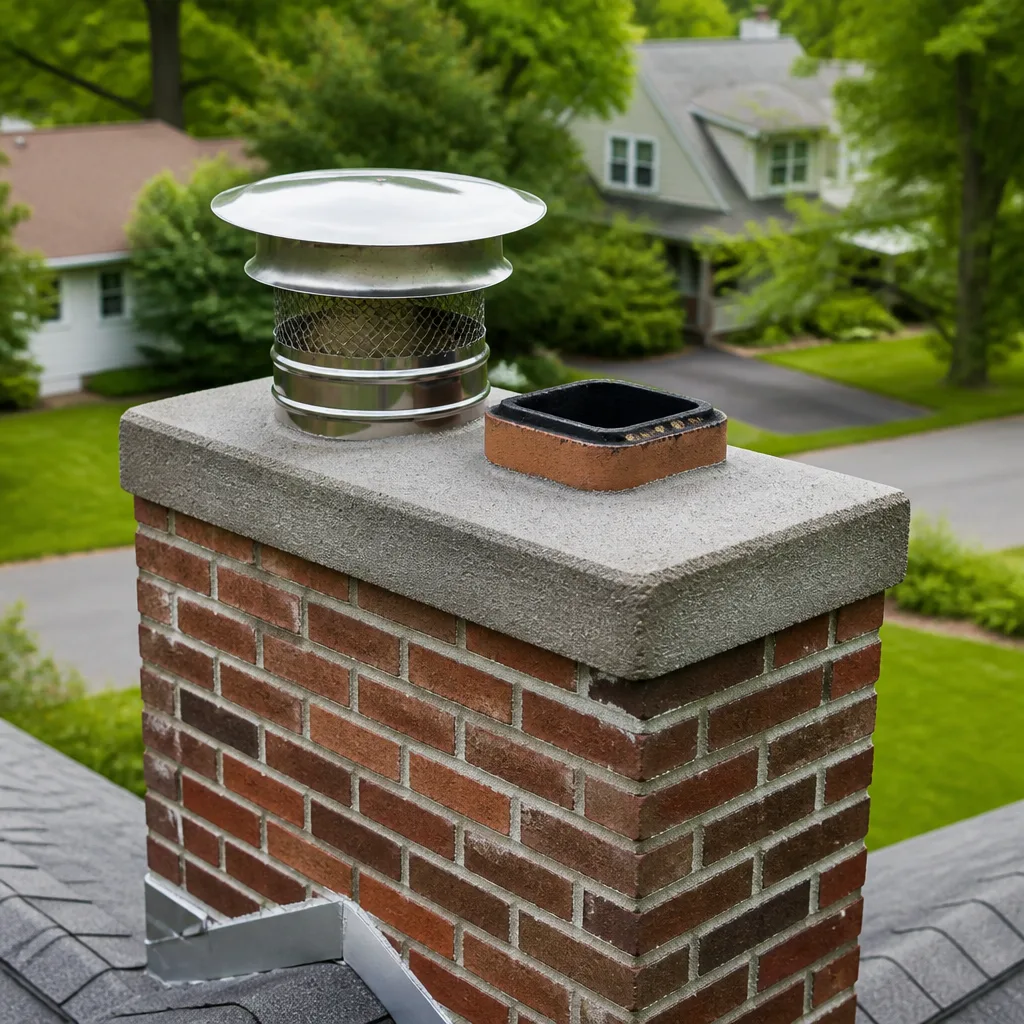
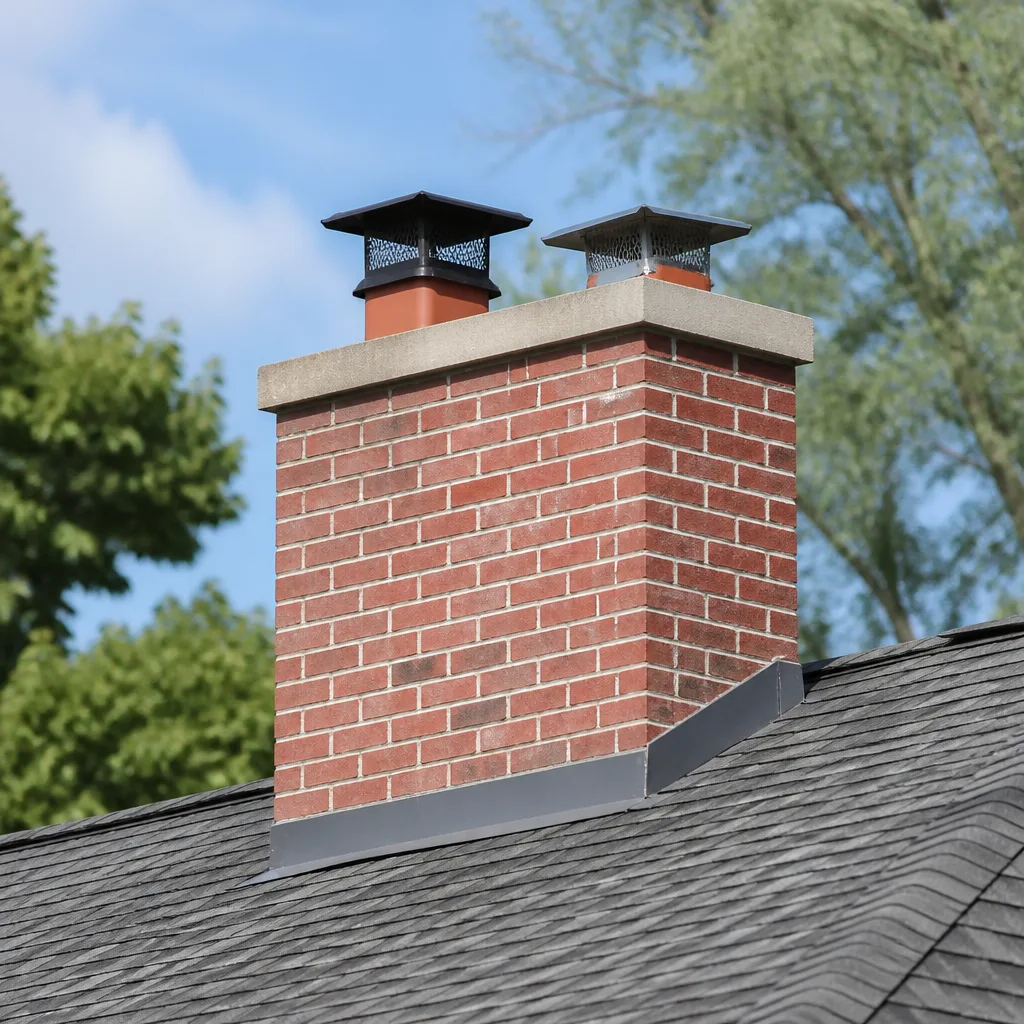 Caps & crowns
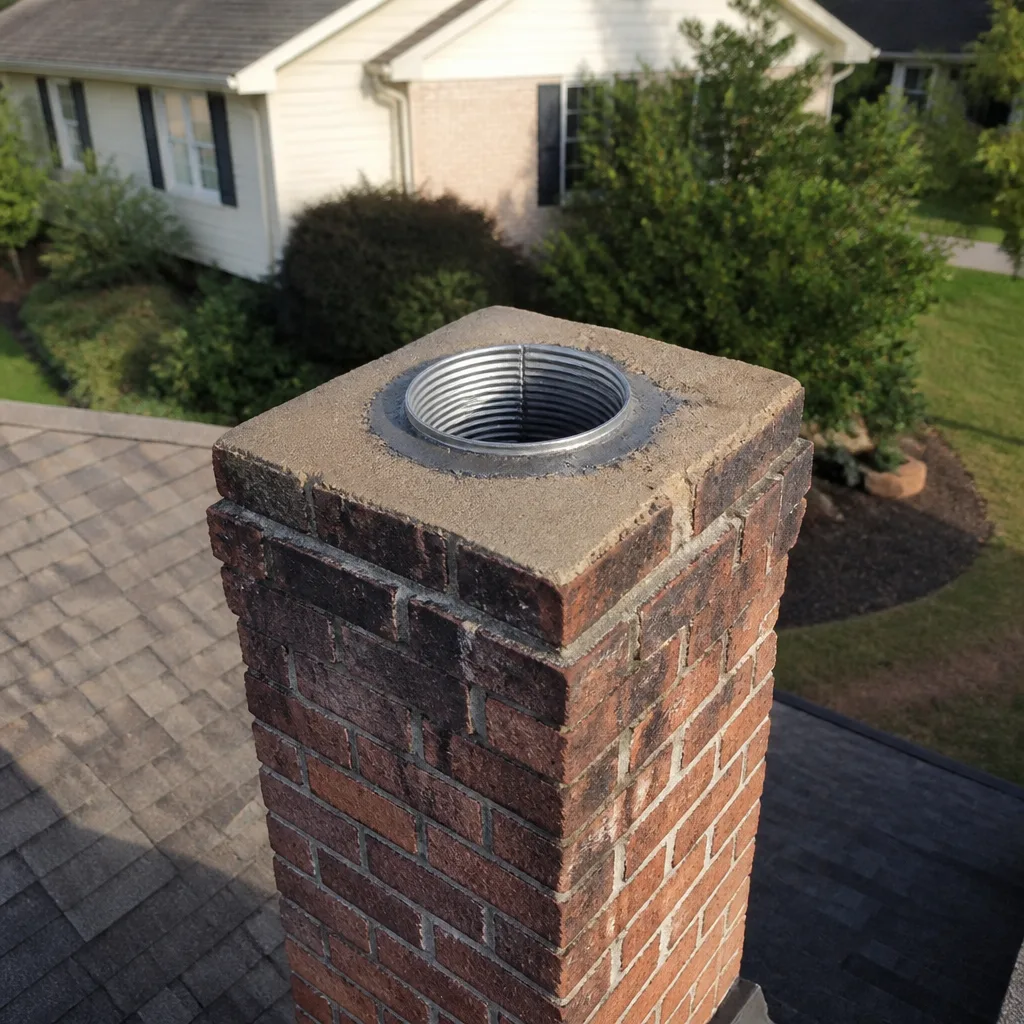 Flue relining
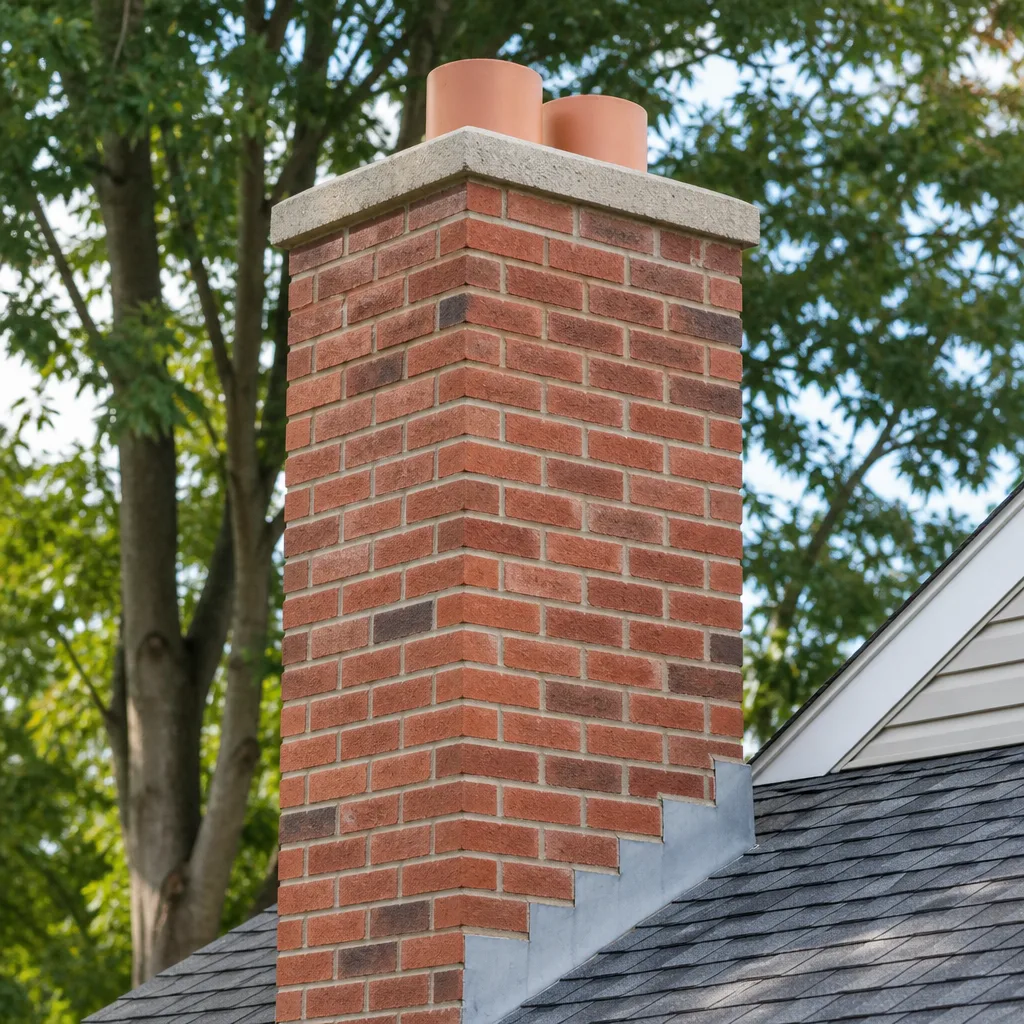 Masonry repair
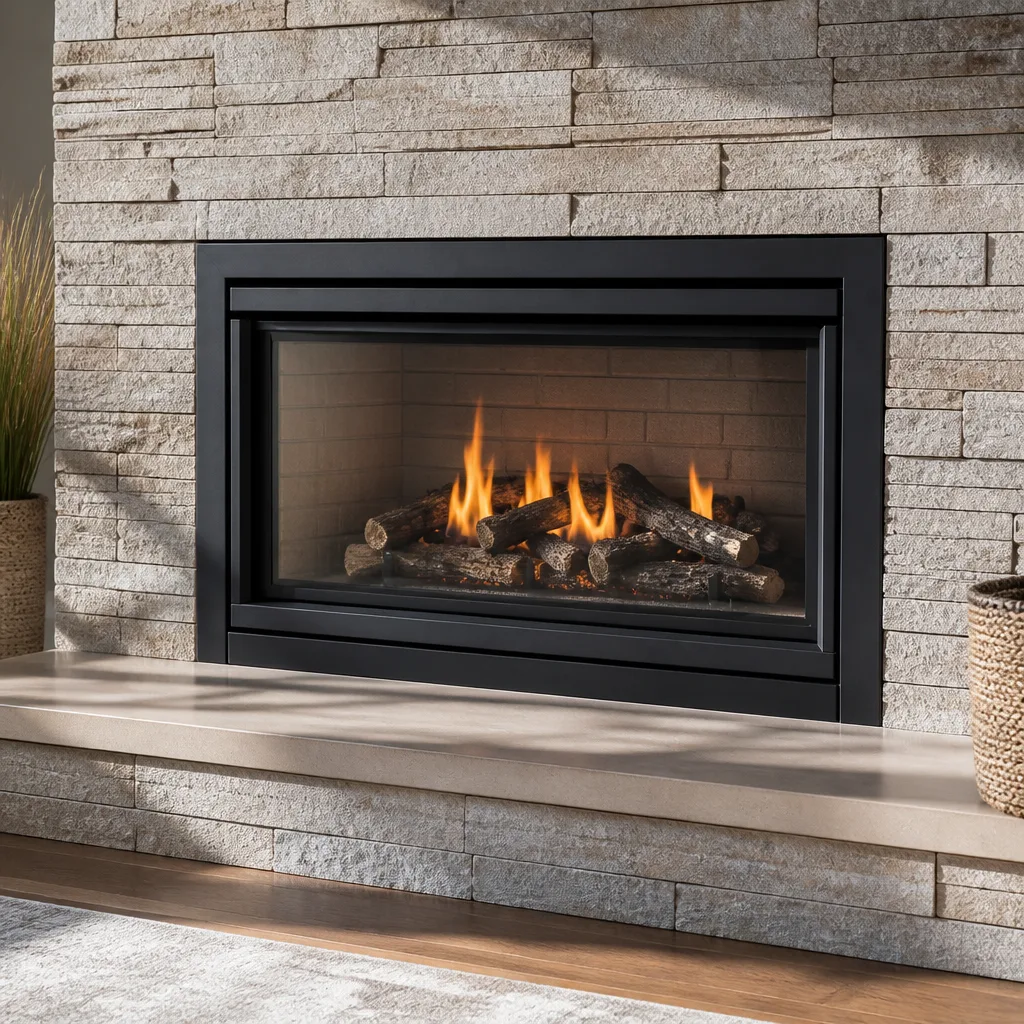 Gas fireplace service
Level 1 sweep and inspection to the NFPA 211 annual standard - flue, crown, cap, and flashing checked and photographed
Chimney sweep logs do not sweep chimneys. They loosen some creosote - which then falls where a brush and vacuum still have to collect it.
Chimney Cleaning Warning Signs: A Rialto Homeowner’s Reference Guide
A white stain running down the outside of a chimney isn’t a cosmetic problem. It’s efflorescence, and it means water is moving through the masonry in a way that will crack the liner from the inside within a few seasons if the entry point isn’t sealed. Most Rialto homeowners dismiss chimney warning signs as minor nuisances: a faint smell when the wind blows a certain way, a slightly sticky damper, a small stain on the ceiling near the fireplace. But each of those signals maps to a specific diagnostic category that a trained sweep can trace to a component and a cause. This guide teaches you to read your chimney the way we read them, so when you call a technician, you’re reporting accurate observations instead of “something seems off.” For more guides & resources, visit our blog.
Styles & brands we work with
Quick Answer
The most common chimney warning signs in Rialto homes are a sharp or acrid smell near the fireplace in humid weather, white staining (efflorescence) on exterior brick, black glazing inside the firebox, smoke rolling into the room on windy days, and a damper that’s hard to open or close. Each points to a different underlying issue: creosote buildup, water intrusion, a deteriorating liner, or draft failure. Any one of them warrants a professional inspection before the next fire.
Table of Contents
- Smell-Based Warnings: Reading What Your Nose Is Telling You
- Exterior Signals: Efflorescence, Spalling, and Cap Deterioration
- Inside the Firebox: What the Walls Are Telling You
- Draft and Performance Signals: Smoke, Slow Starts, and Summer Odors
- Clean-and-Done vs. Liner Assessment: How to Tell the Difference
- The Rialto Factor: Climate, Codes, and Local Conditions
- Common Mistakes to Avoid
Smell-Based Warnings: Reading What Your Nose Is Telling You
Your nose is the earliest and most reliable diagnostic tool you own, and chimney odors fall into three distinct categories that point to three very different problems. In our experience, Rialto homeowners often describe the same generic “fireplace smell” when the underlying causes are entirely unrelated. Learning the difference changes what you ask for when you call.
Musty or damp smell means water is getting into the flue. In Rialto’s climate, where winter rains follow long dry stretches, the freeze-thaw cycle isn’t the primary concern it is in colder regions, but water intrusion still degrades mortar joints and liner material. A musty odor in summer, when the fireplace hasn’t been used for months, almost always indicates moisture trapped behind the damper or absorbed into the masonry. The entry point is typically a cracked crown, compromised flashing, or a missing rain cap. Ignored long enough, that moisture softens the clay or metal liner and sets up the conditions for a costly repair down the road.
Acrid or sharp smell, especially noticeable on humid days or when the house is closed up, points to creosote accumulation. Creosote is a byproduct of incomplete wood combustion, and it has a sharp, tar-like odor distinct from mold. Even a thin layer will off-gas when humidity rises. This is the most common complaint we hear from Rialto homeowners heading into fall: the fireplace hasn’t been used since spring, but a hot August afternoon makes the living room smell like an old smoker’s porch. That’s creosote, and it’s the leading cause of chimney fires. A Chimney Sweep in Rialto can remove it in a single visit, but the longer you wait, the more likely that buildup has advanced to a hardened, glazed stage that requires mechanical removal rather than standard brushing.
Smoky smell with no fire burning is different again. If you catch a whiff of last winter’s fires in June, something is pulling air down the chimney instead of letting it rise. The cause might be a bird nest or squirrel debris blocking the flue, a damper that’s warped and won’t seal, or negative air pressure inside the house that’s reversing the draft. Each cause maps to a different fix, and only a visual inspection with the right tools will tell you which one you’re dealing with.
Exterior Signals: Efflorescence, Spalling, and Cap Deterioration
Walk around your house and look at the chimney from the ground. You don’t need a ladder or any special knowledge to spot the four exterior warning signs that matter most. Each maps to a specific root cause, and the sooner you identify them, the cheaper and easier the repair.
Efflorescence: The White Stain That’s Not a Stain
Efflorescence appears as a chalky white or grayish film on brick or block. It forms when water enters the masonry, dissolves the natural salts inside, then evaporates at the surface and leaves those salts behind. The stain itself isn’t the problem. The problem is that water is moving through your chimney structure, and wherever salts can crystallize, brick and mortar can crack. In Rialto, efflorescence typically follows a winter of heavy rain against an unsealed crown or poorly flashed roofline. If you see it, the flue liner is already under moisture stress.
Spalling Brick: When the Face Flakes Off
Spalling is when the outer face of a brick flakes, chips, or pops off, leaving a rough, recessed surface. It’s what happens when trapped moisture expands and contracts inside the brick itself. Spalling is structural damage in progress. Once the protective face of a brick is gone, the softer interior absorbs water faster, and the cycle accelerates. Catching spalling early often means tuckpointing and sealing. Catching it late can mean rebuilding sections of the chimney stack. Our Chimney Repair in Rialto service routinely addresses spalling that homeowners assumed was just “old brick.”
Crown Cracking Patterns
The crown is the concrete or mortar cap at the very top of the chimney. Its whole job is to shed water away from the flue and the masonry below. Hairline cracks are normal. Cracks you can see from the ground that run in a spiderweb pattern or follow the joint where crown meets flue tile are a red flag. Water that gets through the crown drips down inside the structure and attacks the liner from the outside. A crown in good condition is sloped to shed water and overhangs the brick by at least an inch on all sides. Few older Rialto chimneys still meet that standard.
Rust Staining from Cap Deterioration
Rust streaks running down the crown or brick near the top typically mean the chimney cap or the flue cover is corroding. A cap doesn’t just keep rain out directly. It also prevents downdrafts, keeps out birds and rodents, and stops burning embers from escaping onto your roof. Rust is a sign the cap has done its time. When we replace a deteriorating cap, we specify brands like Copperfield, because the difference between a galvanized cap that lasts five years and a properly engineered cap that lasts twenty is a materials decision, not a labor decision. For more on selecting quality components, read our guide to Choosing the Right Chimney Cleaning Brand: A Buyer’s Guide for Rialto.
Inside the Firebox: What the Walls Are Telling You
Open the glass doors or pull the screen aside and look at the firebox itself, the chamber where the fire burns. Three specific signals tell you what’s happening inside your system, and they’re easy to read once you know what they mean.
White Haze: Condensation, Not Ash
A thin white film on firebox walls that looks like dust but doesn’t wipe away with a dry cloth is condensation residue. It forms when moisture inside the flue mixes with the mineral content of the masonry and dries on the firebox surface. White haze is a secondary symptom of the same water intrusion that causes efflorescence outside. If you’re seeing it regularly on the inside and staining on the outside, your chimney has a moisture problem at the top, not a cleaning problem in the middle.
Black Glazing: Stage 2 to 3 Creosote
Creosote progresses through three stages. Stage 1 is a flaky soot that brushes off easily. Stage 2 is a granular, crunchy buildup that needs more aggressive brushing. Stage 3 is glazed creosote: a hard, shiny, tar-like coating that resembles black glass and can’t be removed by standard sweeping alone. Stage 2 and 3 creosote represent a serious chimney fire risk. The problem is that most homeowners can’t tell Stage 1 from Stage 3 by looking. That’s exactly why a professional inspection matters. A sweep with a CCTV camera can document what’s coating your flue and tell you whether a cleaning solves it or whether you need chemical treatment or mechanical removal.
Mortar Joint Erosion Between Firebrick
Run your finger along the joints between firebricks in the firebox. If the mortar feels soft, crumbles out, or has recessed well below the brick face, the firebox is absorbing heat stress it wasn’t designed to handle. Missing mortar joints allow heat to reach the combustible framing behind the firebox, and they’re a pathway for smoke to escape into the wall cavity. Joint erosion is a repair matter, not a sweeping matter. In many cases, repointing the firebox with the right refractory mortar solves the issue. In advanced cases, especially when combined with flue liner damage, a rebuild or a HeatShield restoration may be the more cost-effective route.
Draft and Performance Signals: Smoke, Slow Starts, and Summer Odors
Draft is the invisible current that draws smoke up the flue and away from your home. When draft fails, the symptoms are immediate and impossible to ignore. But the cause isn’t always obvious, and treating the wrong cause is a waste of time and money.
Smoke Rollout
Smoke rollout happens when you light a fire and smoke billows into the room instead of rising up the chimney. The most common causes, in order of frequency we see in Rialto homes, are a cold flue, a blocked flue, negative indoor air pressure, or an undersized flue for the firebox. Each maps to a different solution. A cold flue needs preheating technique or a top-sealing damper. A blocked flue needs cleaning or animal removal. Negative pressure, common in newer, tightly sealed Rialto homes, needs make-up air or a different damper arrangement. An undersized flue is the most expensive to fix and the most important to identify before you waste money on other remedies.
Slow-Starting Fires
If you find yourself using more kindling, more newspaper, and more patience just to get a fire going, and then it smolders instead of burning hot, you probably have a draft restriction. It could be creosote narrowing the flue, a damper that isn’t opening fully, or a cap clogged with debris. Slow starts aren’t just annoying. They’re inefficient. A smoldering fire produces more creosote per log burned because the smoke isn’t hot enough to rise cleanly. That means every awkward, slow start is actively adding to the very problem that’s causing it.
Summer Fireplace Odors
We covered smell-based warnings earlier, but the seasonal pattern deserves emphasis. If your fireplace smells fine all winter and bad all summer, the issue is almost always a downdraft carrying creosote odor into the house. The fix is often a better cap or damper. Copperfield caps with proper geometry make a measurable difference in downdraft control, as does a well-fitted top-sealing damper. Dryer vent problems show a related but distinct pattern: a musty smell in the laundry room, lint accumulating around the vent exterior, or clothes taking two cycles to dry all point to restricted airflow. Dryer Vent Cleaning in Rialto addresses that side of the combustion-safety equation, and it’s a fire hazard with the same annual-recommendation logic as chimney sweeping.
Clean-and-Done vs. Liner Assessment: How to Tell the Difference
Not every warning sign demands a liner inspection. Some issues resolve with a standard sweeping and a cap adjustment. Others require a camera inspection before you light another fire. Here’s how we distinguish between them, and how you can make an informed call.
A clean-and-done situation typically looks like this: light Stage 1 creosote, a working damper, an intact cap, no water staining inside or out, and no smoke rollout when the flue is warm. The chimney functions, it just needs the seasonal buildup removed. A standard sweep, a visual check, and you’re good for another year.
A liner-assessment situation involves any of these:
- Visible flue tile pieces in the firebox after a cleaning
- White haze on firebox walls combined with exterior efflorescence
- Stage 3 glazed creosote that won’t brush off
- Smoke leaking through cracks in the chimney structure during a fire
- A known chimney fire, even a small one, at any point in the past
- Rust flakes or metallic debris coming down the flue (indicates a metal liner corroding from inside)
When we see these signals, we recommend a CCTV camera inspection before the next fire. The camera shows you exactly what’s inside, in real time, and you make the repair decision with evidence in front of you rather than trusting a verbal diagnosis. HeatShield restoration is one of the repair paths available, and it’s worth understanding what distinguishes it: instead of tearing out a damaged clay liner and replacing it, a HeatShield-certified tech applies a ceramic sealant that restores the flue to a smooth, insulated, functional state. It can add years to a deteriorating liner at a fraction of the cost of a full replacement. Not every chimney qualifies, which is why the camera inspection comes first.
The Rialto Factor: Climate, Codes, and Local Conditions
Rialto sits in a specific band of Southern California where the inland heat and the winter rain patterns create a distinct set of chimney health factors. This isn’t boilerplate. It affects what you should watch for and when.
Summer Heat and Creosote Off-Gassing
Rialto summers routinely push into the high 90s, and those temperatures bake the creosote inside an uncleaned flue. Hot weather with low rainfall means no rinse cycle, so the compounds just sit and volatilize. That’s why late summer is prime season for complaints about fireplace odors in Rialto homes that were perfectly quiet in February. When the house is closed up with AC running, any air pulled into the home brings creosote odor with it.
Santa Ana Wind Events and Downdrafts
Santa Ana winds hit the Inland Empire hard, and Rialto gets its share. Strong, gusty winds from the northeast can overpower the natural draft of a chimney, especially one with a missing or undersized cap. If you notice smoke rollout or a smoky smell on windy days specifically, the wind is your diagnostic clue. The fix is often a better cap or a taller flue termination, not a cleaning. It’s the kind of detail that saves homeowners from paying for the wrong service.
Winter Rains and Water Intrusion
Rialto’s wet season delivers concentrated rain over a few months, then long dry stretches. That pattern means water that gets into a chimney during winter has months of warm weather to sit and cause damage. Efflorescence and spalling usually appear in spring and summer as trapped moisture migrates out. If you notice new white staining after the rainy season, don’t wait until fall to address it. The damage is compounding every month it stays wet.
Local Building Reality
Many Rialto homes were built in decades when chimney standards were looser than today’s code. We regularly see flues that would never pass a modern inspection: unlined masonry, missing caps, crowns poured flat, fireboxes built tight against framing. A house built in the 1960s may have a chimney that worked fine for its original owners but carries material deficiencies by today’s standards. Knowing your home’s era tells you how seriously to take early warning signs. Older chimneys deserve more scrutiny, not less.
If you’re new to the area or unsure what’s normal for a Rialto chimney, a professional inspection gives you a baseline. From there, you’re making decisions with information, not guesswork. The Chestnut Chimney Sweep home page outlines how we approach inspections and what you can expect from an appointment.
Common Mistakes to Avoid
- Ignoring efflorescence because it’s “just a stain.” The white deposit is proof of water movement, and the underlying cause gets more expensive every season it goes unsealed. A crown seal today beats a liner replacement in three years.
- Burning manufactured logs to “clean” the chimney. Some products make marketing claims about reducing creosote, but they don’t replace mechanical sweeping, and they can mask draft problems you should be diagnosing. A clean flue comes from a brush or a rod, not a log.
- Closing the damper tighter to stop summer smells. A damper that seals better won’t stop odors if the source is a moisture problem or creosote buildup. You’ll still smell it, and now you’ve trapped the moisture inside too.
- Waiting until you see smoke in the room to call. Smoke rollout is a late-stage symptom. The early warnings, smell, staining, slow starts, arrive months or years earlier. Acting early means a cheaper fix and no scary moment with a room full of smoke.
- Treating chimney and dryer vent as separate projects. Both are combustion-safety systems. Both produce the same class of warning signs: reduced draft, smells, lint or soot buildup. One call covers both, and a good sweep will ask about your dryer vent while they’re there.
- Assuming an old fireplace is automatically unsafe. The opposite mistake is just as common. Some older Rialto fireplaces are perfectly serviceable with a proper cap, a clean flue, and a good damper. Don’t replace what you can inspect.
- Hiring a sweep without asking about camera inspection capability. Not every company carries CCTV equipment. If a sweep can’t show you the inside of your flue, you’re buying a verbal report. For anything beyond a routine cleaning, insist on the camera.
When to Call a Professional
Call a chimney professional if you notice any of the following: a strong odor that changes with weather or humidity, white staining on exterior brick, black glazing inside the firebox, smoke coming into the room, a damper that won’t operate smoothly, or water stains on the ceiling near the chimney. Call immediately if you’ve had a chimney fire, even a small one. The flue liner may look fine from the outside and be structurally compromised from the heat. Also call if you bought a home with a fireplace and have no record of the last cleaning. An inspection establishes your baseline, and you’ll know what you’re working with before burning season arrives. Chestnut Chimney Sweep offers free estimates in Rialto, call (855) 360-4975.
Frequently Asked Questions
The National Fire Protection Association recommends an annual inspection and cleaning as needed, typically every 1 to 2 years for wood-burning fireplaces used regularly through the winter. In Rialto’s hot, dry summers, creosote sitting in an unused flue can harden and off-gas, which is another reason to clean in late summer or early fall, before burning season. Call (855) 360-4975 to schedule a sweep or get a free estimate.
A chimney fire often smells like a hot, acrid, tar-like burn, more intense and sharp than a normal wood fire, and some homeowners report a crackling or rumbling sound like a freight train from the flue. If you’ve had one, even briefly, the liner needs inspection before the next fire, because the heat can crack clay tiles and expose combustible framing. A camera inspection shows whether the flue survived intact.
When your fireplace smells in warm weather but behaves fine in cold weather, the flue is allowing a downdraft that carries creosote odor into the house while the air conditioning is running. The usual causes are a missing or undersized cap, a damper that won’t seal, or negative air pressure in a tightly sealed home. Fixing it starts with identifying which of those is driving the reversal. For an assessment, call (855) 360-4975.
A standard chimney sweeping in Rialto typically runs between $180 and $300 for a straightforward, single-flue cleaning with no unusual repairs. The price moves up when the flue has hardened Stage 2 or 3 glazed creosote, when animals have nested and need removal, or when the sweep identifies damage that requires repair. Call (855) 360-4975 for an exact quote, and estimates are free.
Not every damaged liner requires full replacement. A CCTV camera inspection tells you whether the liner qualifies for HeatShield restoration, a ceramic sealant process that can restore a deteriorating clay liner without a full tearout, or whether the damage is too advanced and replacement is the only safe path. The key is having camera evidence before you commit to any repair, and we don’t recommend a liner without showing you the footage. Call (855) 360-4975 to schedule an inspection.
Skipping cleaning lets creosote accumulate, and creosote is combustible. The risk scales with buildup: Stage 1 is a fire hazard, Stage 3 is a waiting fire. In a house with an older flue or unknown liner condition, skipping a cleaning also means skipping the inspection that would catch water damage, animal nests, or a cracked tile before it becomes a structural problem. The cost of a sweep is small compared to the cost of a chimney fire or a liner replacement.
The Bottom Line
Your chimney talks. It talks in smells, stains, sounds, and slow starts, and every signal maps to a specific, diagnosable cause. The white stain outside points to water. The sharp smell in August points to creosote. The smoke on a windy day points to draft reversal. Learning to read those signals doesn’t make you a chimney technician, but it makes you a better-informed homeowner, one who calls with useful observations and understands what the technician is reporting back. In Rialto, where heat bakes flues all summer and rains soak masonry all winter, annual attention to your chimney is the cheapest insurance you can buy.
Written by the team at Chestnut Chimney Sweep, serving Rialto since 2012.
See the difference
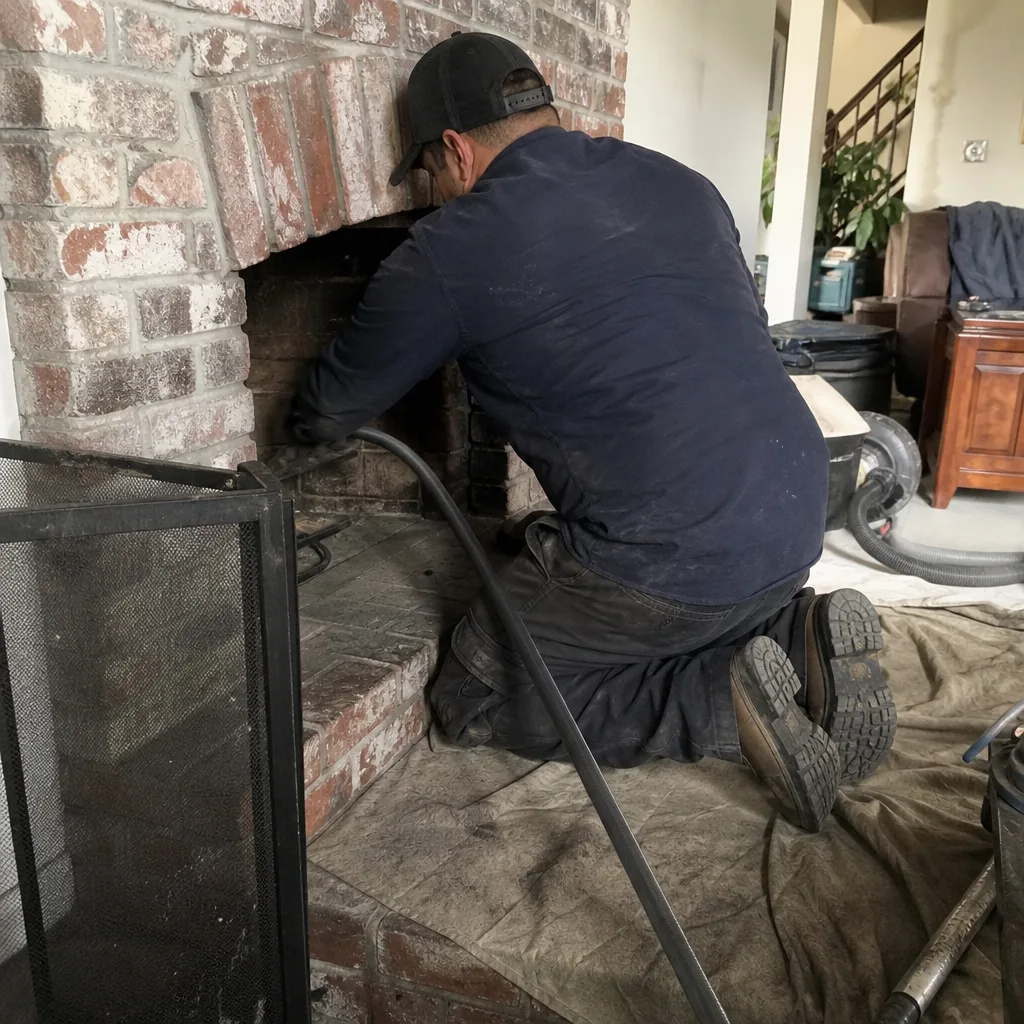 Before
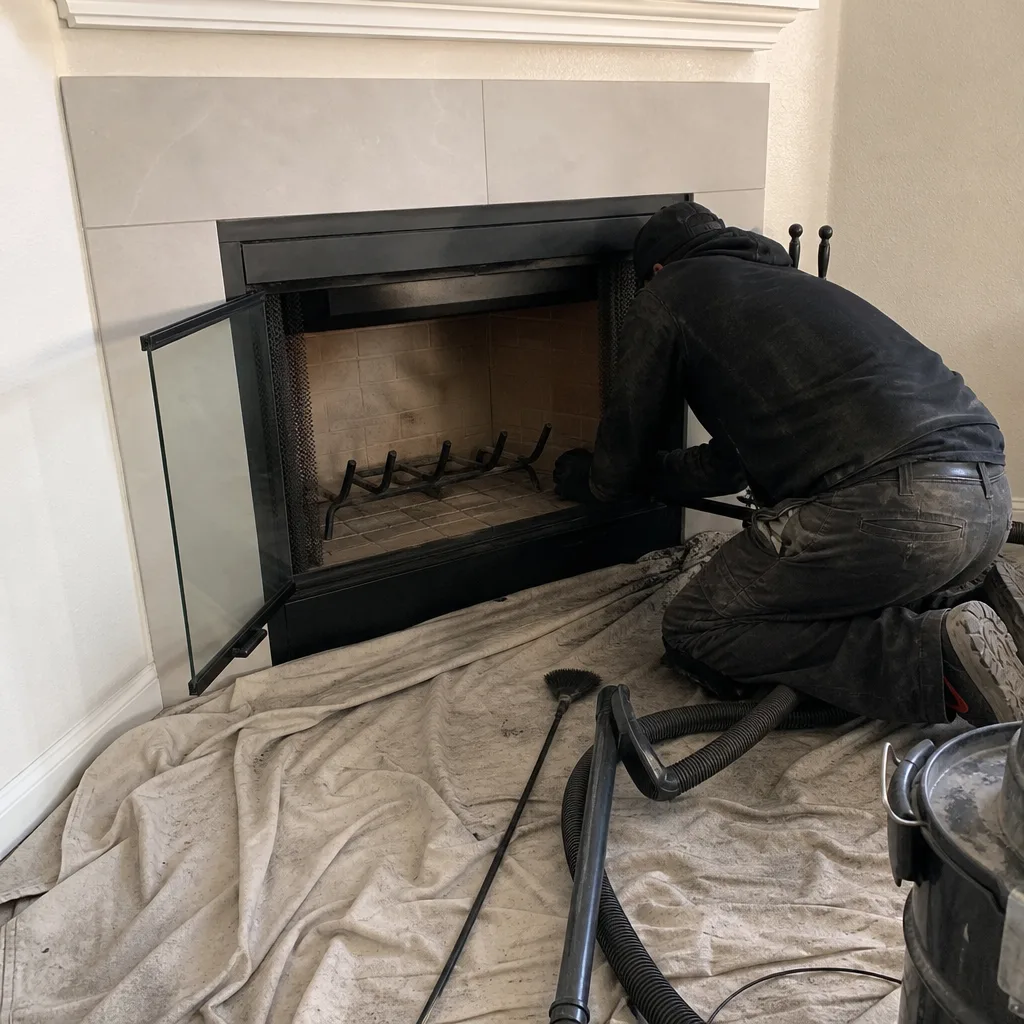 After
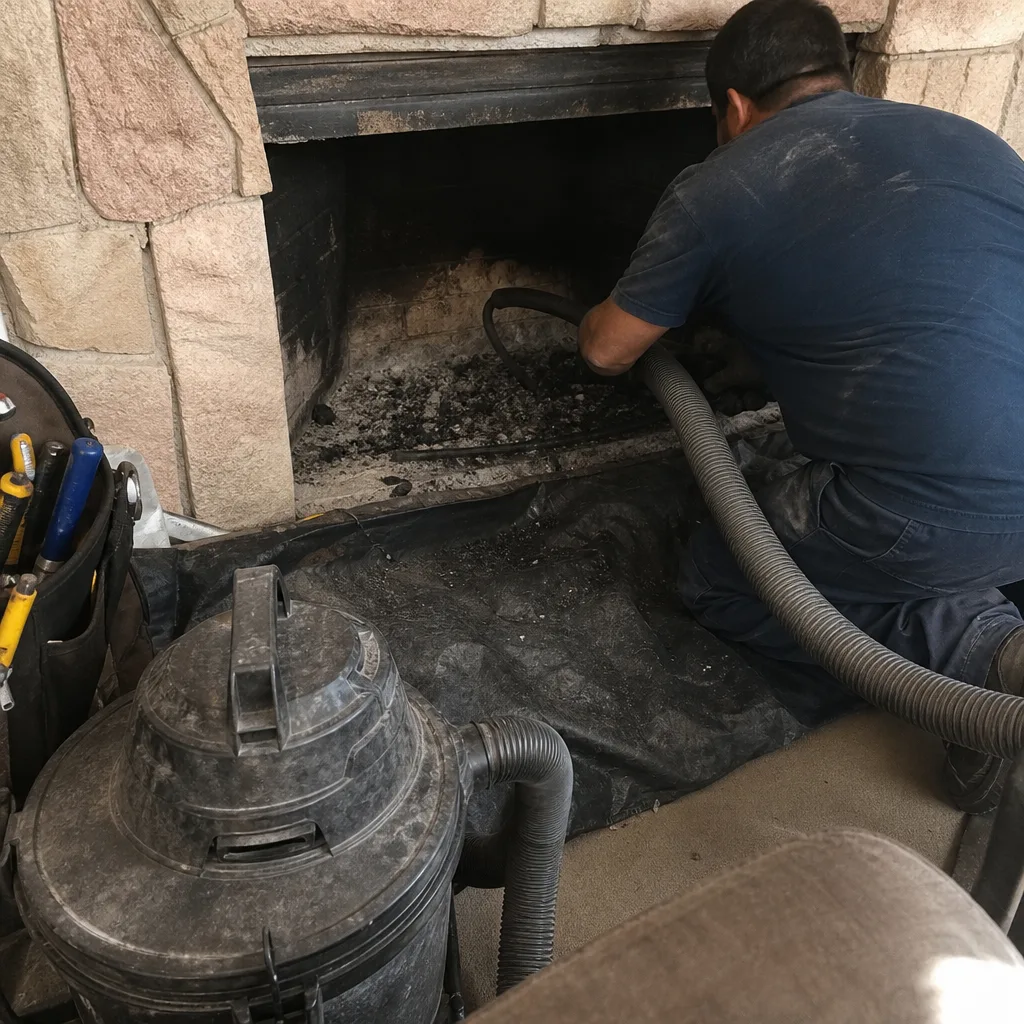 Before
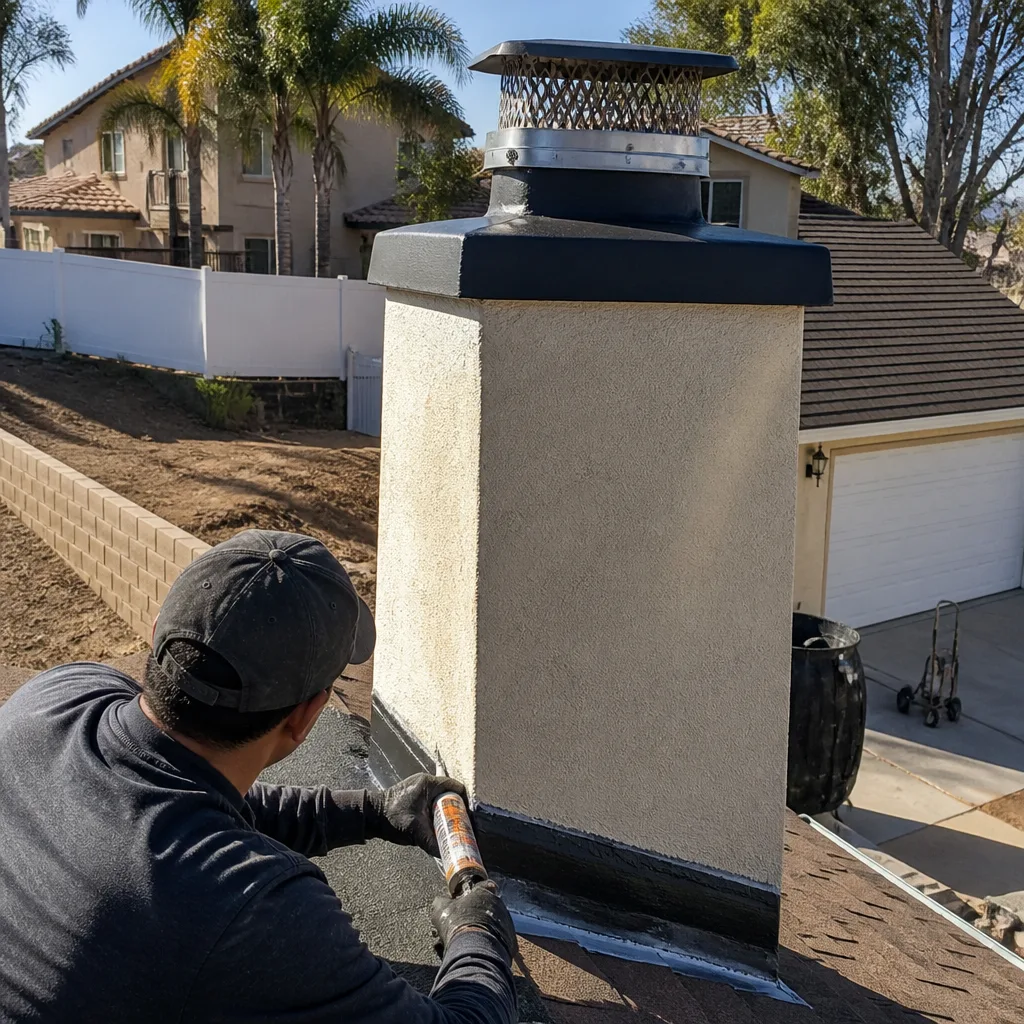 After
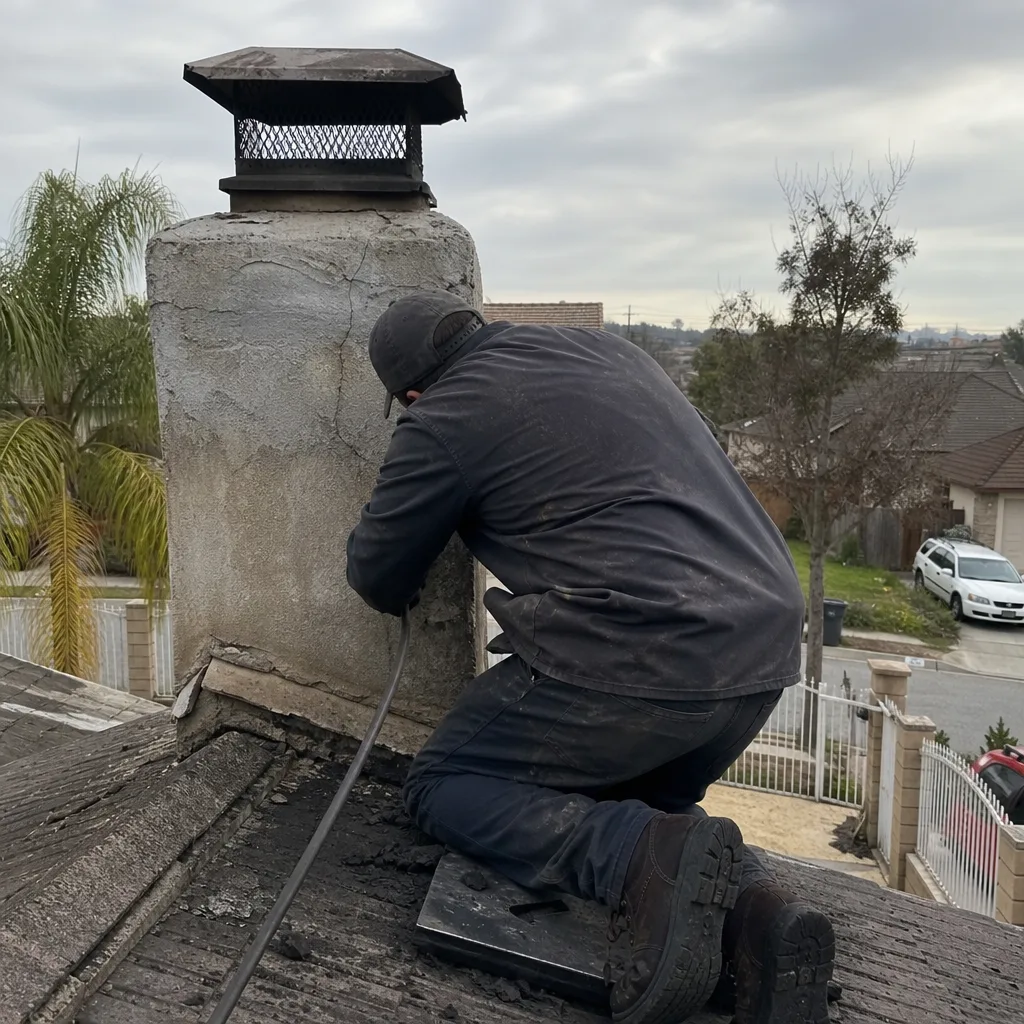 Before
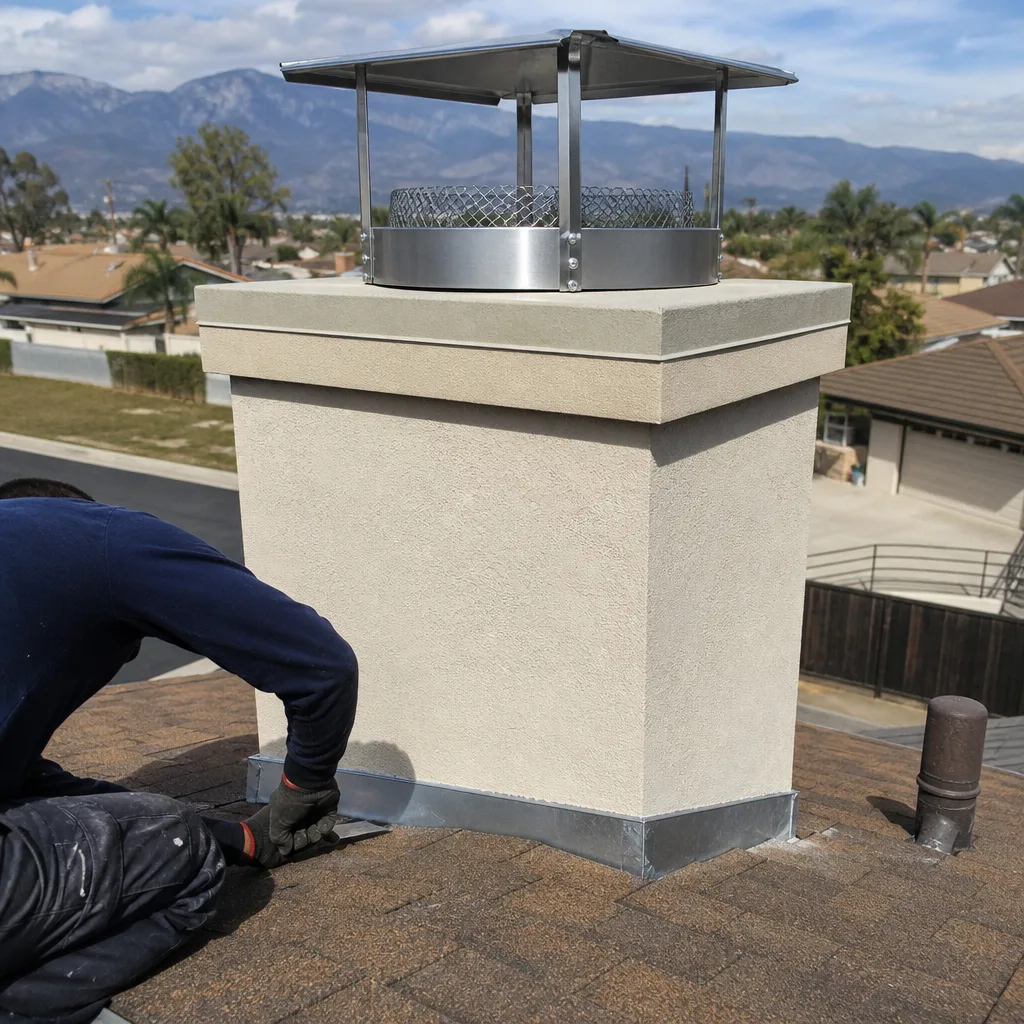 After